
Introduction
As businesses continue embracing digital transformation, remote work, cloud computing, and mobile technology, the number of devices connected to corporate networks continues to grow rapidly. Laptops, desktops, smartphones, tablets, servers, and Internet of Things (IoT) devices have become essential tools for modern organizations. While these technologies improve productivity and efficiency, they also create new opportunities for cybercriminals to launch attacks.
Cyber attackers increasingly target endpoints because they often represent the easiest entry point into an organization’s network. A single compromised device can allow attackers to steal sensitive data, deploy ransomware, move laterally across systems, and disrupt business operations. Traditional antivirus software alone is no longer sufficient to defend against modern threats such as ransomware, zero-day exploits, advanced malware, phishing attacks, and fileless attacks.
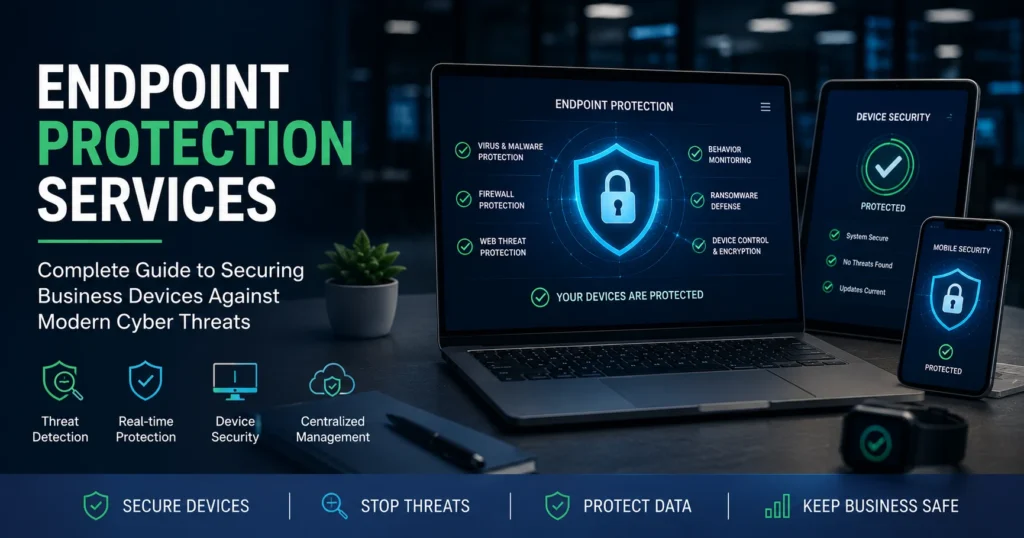
Endpoint Protection Services provide comprehensive security solutions designed to secure all endpoint devices connected to an organization’s network. These services combine advanced threat detection, endpoint monitoring, artificial intelligence, behavioral analysis, and rapid incident response capabilities to prevent cyberattacks and minimize business risks.
Whether supporting a small business, enterprise corporation, healthcare provider, financial institution, educational organization, or government agency, endpoint protection has become one of the most important components of a modern cybersecurity strategy.
This comprehensive guide explores Endpoint Protection Services, their benefits, technologies, best practices, and how they help organizations protect critical business assets.
What Are Endpoint Protection Services?
Endpoint Protection Services are cybersecurity solutions designed to secure endpoint devices from cyber threats and unauthorized access.
An endpoint refers to any device that connects to a network.
Examples include:
- Desktop computers
- Laptops
- Mobile devices
- Tablets
- Servers
- Virtual machines
- Point-of-sale systems
- IoT devices
Endpoint protection services help organizations:
- Detect threats
- Prevent attacks
- Monitor devices
- Investigate incidents
- Respond to security events
These services provide centralized visibility and control across all devices within an organization’s environment.
Why Endpoint Protection Is Important
Modern workplaces rely heavily on endpoint devices.
Employees access company resources from multiple locations using various devices.
Without proper protection, endpoints become attractive targets for cybercriminals.
Growing Attack Surface
Every connected device increases potential exposure to cyber threats.
Remote Work Risks
Remote work environments often involve unsecured networks and personal devices.
Sophisticated Threats
Attackers use increasingly advanced methods to evade traditional security controls.
Regulatory Compliance
Many regulations require organizations to secure endpoints and protect sensitive information.
Business Continuity
Compromised endpoints can disrupt operations and lead to costly downtime.
Common Endpoint Security Threats
Malware
Malware remains one of the most common endpoint threats.
Examples include:
- Viruses
- Worms
- Trojans
- Spyware
- Rootkits
Ransomware
Ransomware encrypts files and demands payment for recovery.
Endpoint protection plays a critical role in detecting ransomware activity before significant damage occurs.
Phishing Attacks
Phishing emails often target endpoint users to steal credentials or deliver malware.
Fileless Attacks
Fileless malware operates within memory and leaves minimal traces on disk.
Traditional antivirus tools may struggle to detect these attacks.
Credential Theft
Attackers frequently target passwords and authentication tokens stored on endpoint devices.
Insider Threats
Employees or contractors may intentionally or accidentally compromise endpoint security.
Zero-Day Exploits
Zero-day vulnerabilities are security flaws exploited before patches become available.
How Endpoint Protection Services Work
Endpoint protection involves multiple layers of security working together.
Threat Prevention
Known threats are blocked before they can execute.
Threat Detection
Advanced analytics identify suspicious behavior and anomalies.
Continuous Monitoring
Endpoints are monitored continuously for signs of compromise.
Incident Investigation
Security teams analyze alerts and investigate suspicious activities.
Threat Response
Compromised devices can be isolated to prevent further spread.
Recovery
Systems are restored to normal operation following remediation.
Components of Endpoint Protection Services
Antivirus Protection
Modern antivirus solutions detect and remove known malware.
However, today’s endpoint security extends far beyond traditional antivirus capabilities.
Endpoint Detection and Response (EDR)
EDR solutions continuously monitor endpoint activities.
Capabilities include:
- Behavioral analysis
- Threat hunting
- Incident investigation
- Automated response
EDR provides deeper visibility into endpoint activity.
Extended Detection and Response (XDR)
XDR expands visibility beyond endpoints.
It integrates data from:
- Networks
- Cloud platforms
- Email systems
- Security tools
This improves overall threat detection accuracy.
Anti-Ransomware Protection
Specialized technologies identify ransomware behavior and block encryption attempts.
Application Control
Application control restricts unauthorized software from running on devices.
Device Control
Organizations can manage external devices such as:
- USB drives
- External storage devices
- Peripheral hardware
Data Loss Prevention (DLP)
DLP solutions prevent unauthorized transmission of sensitive information.
Key Features of Endpoint Protection Services
Real-Time Threat Detection
Continuous monitoring identifies threats immediately.
Behavioral Analysis
Modern solutions analyze behavior rather than relying solely on signatures.
Automated Response
Threats can be contained automatically without human intervention.
Threat Intelligence Integration
Global threat intelligence improves detection capabilities.
Centralized Management
Security teams can manage all endpoints from a single dashboard.
Forensic Investigation
Detailed logs support incident investigations and compliance requirements.
Benefits of Endpoint Protection Services
Improved Security
Organizations gain stronger defenses against cyber threats.
Reduced Risk
Continuous monitoring reduces the likelihood of successful attacks.
Faster Incident Response
Threats are detected and contained more quickly.
Enhanced Visibility
Security teams gain insight into endpoint activities.
Compliance Support
Endpoint security helps organizations meet regulatory requirements.
Lower Operational Costs
Preventing cyber incidents reduces recovery expenses and downtime.
Endpoint Protection vs Traditional Antivirus
Many organizations still rely on traditional antivirus solutions.
However, modern threats require more advanced protection.
Traditional antivirus primarily:
- Uses signature-based detection
- Focuses on known threats
- Provides limited visibility
Endpoint Protection Services offer:
- Behavioral analytics
- Threat intelligence
- Real-time monitoring
- Automated response
- Threat hunting
This makes endpoint protection significantly more effective against modern attacks.
Endpoint Detection and Response (EDR)
EDR has become a cornerstone of endpoint security.
Continuous Monitoring
EDR collects data from endpoint devices in real time.
Threat Detection
Machine learning and analytics identify suspicious behavior.
Investigation
Security analysts can investigate incidents using detailed telemetry.
Response Actions
Compromised endpoints can be isolated immediately.
EDR provides a proactive approach to endpoint security.
Managed Endpoint Protection Services
Many organizations choose managed services rather than maintaining endpoint security internally.
Managed services typically include:
- 24/7 monitoring
- Threat detection
- Incident response
- Security updates
- Reporting
- Threat intelligence
Managed providers deliver enterprise-grade protection without requiring large internal teams.
Industries That Benefit from Endpoint Protection Services
Healthcare
Healthcare organizations manage sensitive patient information.
Endpoint protection secures:
- Medical devices
- Workstations
- Electronic health records
Financial Services
Financial institutions require strong protection against fraud and cybercrime.
Manufacturing
Manufacturers increasingly rely on connected operational technology.
Government
Government agencies protect sensitive citizen and national security information.
Education
Schools and universities manage student records and research data.
Retail
Retail organizations process payment information and customer data.
Endpoint Security Challenges
Remote Workforce Security
Remote employees frequently use home networks and personal devices.
BYOD Environments
Bring Your Own Device programs increase endpoint diversity.
Sophisticated Threats
Attackers continue developing new techniques to evade detection.
Device Proliferation
Organizations must manage growing numbers of connected devices.
Security Skills Shortage
Many organizations lack dedicated endpoint security experts.
Endpoint Protection Best Practices
Deploy Endpoint Protection on All Devices
Every endpoint should be monitored and protected.
Implement Multi-Factor Authentication
MFA reduces the risk of account compromise.
Maintain Regular Updates
Operating systems and applications should be patched regularly.
Restrict Administrative Privileges
Users should receive only the permissions necessary for their roles.
Conduct Security Awareness Training
Employees should understand common cyber threats.
Monitor Endpoint Activity
Continuous monitoring improves visibility and threat detection.
Encrypt Sensitive Data
Encryption protects information stored on endpoint devices.
The Role of Artificial Intelligence in Endpoint Security
AI plays an increasingly important role in modern endpoint protection.
Benefits include:
Threat Prediction
AI identifies attack patterns before incidents occur.
Behavioral Detection
Machine learning recognizes suspicious activities.
Automated Response
Threats can be contained immediately.
Reduced False Positives
AI improves alert accuracy and efficiency.
Endpoint Protection and Compliance
Many regulations require endpoint security controls.
HIPAA
Healthcare organizations must secure devices containing patient information.
PCI-DSS
Payment card environments require endpoint protection measures.
GDPR
Organizations processing personal data must implement appropriate security controls.
SOC 2
Endpoint protection supports security and availability requirements.
ISO 27001
Endpoint security forms a critical component of information security management systems.
Signs Your Organization Needs Endpoint Protection Services
Increasing Cyber Incidents
Frequent malware infections indicate insufficient protection.
Remote Workforce Growth
Remote work increases endpoint-related risks.
Compliance Requirements
Regulations often mandate endpoint security controls.
Lack of Security Visibility
Organizations need better insight into endpoint activities.
Expanding Device Inventory
Growing environments require centralized endpoint management.
Future Trends in Endpoint Protection
AI-Powered Security
Artificial intelligence will continue improving threat detection.
Zero Trust Security
Endpoint verification will become increasingly important.
Cloud-Native Endpoint Security
Organizations are adopting cloud-managed endpoint protection platforms.
Extended Detection and Response
XDR solutions provide broader visibility across environments.
Automated Threat Hunting
Automation will improve detection speed and operational efficiency.
Frequently Asked Questions
What are Endpoint Protection Services?
Endpoint Protection Services secure devices such as computers, laptops, servers, and mobile devices from cyber threats.
Why is endpoint protection important?
Endpoints are common attack targets. Protecting them reduces the risk of data breaches and cyberattacks.
What is EDR?
Endpoint Detection and Response is a security solution that continuously monitors endpoints for suspicious activities.
Can endpoint protection stop ransomware?
Modern endpoint protection solutions can detect and block ransomware behavior before extensive damage occurs.
Are Endpoint Protection Services suitable for small businesses?
Yes. Small businesses increasingly rely on endpoint protection to defend against growing cyber threats.
Conclusion
Endpoint Protection Services have become a critical component of modern cybersecurity programs. As organizations continue expanding their digital environments through remote work, cloud adoption, mobile devices, and connected technologies, endpoints remain one of the most frequently targeted attack surfaces.
Modern endpoint protection solutions go far beyond traditional antivirus software by combining advanced threat detection, behavioral analysis, artificial intelligence, endpoint monitoring, and rapid incident response capabilities. These technologies help organizations defend against ransomware, malware, phishing attacks, insider threats, credential theft, and advanced cyber threats.
By implementing comprehensive Endpoint Protection Services, organizations improve security visibility, reduce operational risks, strengthen compliance efforts, and enhance business resilience. Whether through managed security providers or internal security teams, endpoint protection remains one of the most effective investments organizations can make to protect critical business assets and maintain a strong cybersecurity posture in today’s rapidly evolving threat landscape.