
Introduction
Enterprise Resource Planning (ERP) systems have become the backbone of modern organizations. Businesses across industries rely on ERP software to manage accounting, inventory, procurement, human resources, customer relationships, manufacturing, and reporting from a centralized platform. However, implementing an ERP system is only the beginning. Continuous ERP support is essential to ensure the software operates efficiently, securely, and reliably.
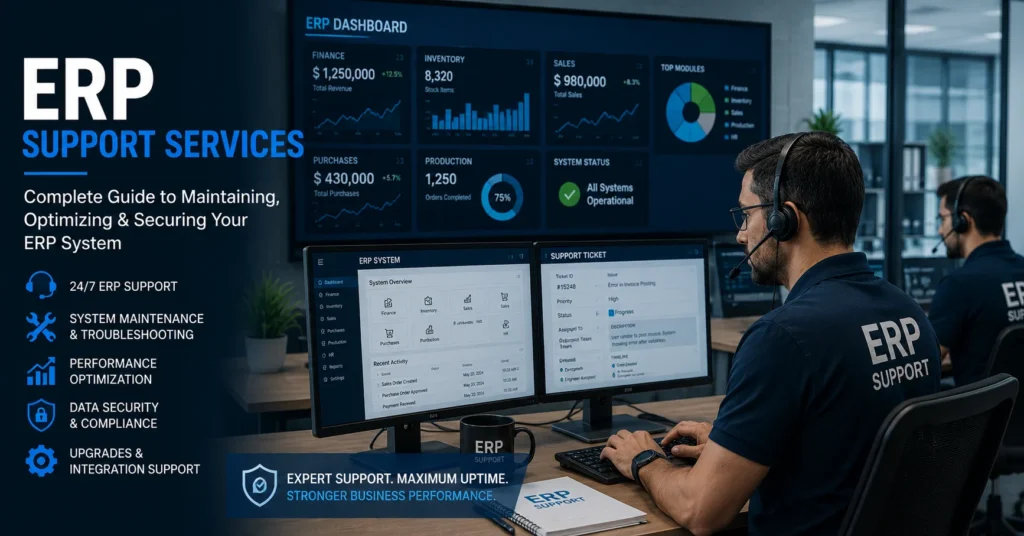
ERP Support Services help organizations maintain system performance, resolve technical issues, optimize workflows, support users, manage updates, and protect critical business data. Without proper support, ERP environments can experience downtime, performance bottlenecks, security vulnerabilities, and costly disruptions.
This comprehensive guide explains everything organizations need to know about ERP Support Services, including their benefits, components, challenges, best practices, and how professional ERP support providers help businesses maximize their ERP investment.
What Are ERP Support Services?
ERP Support Services refer to the ongoing technical, functional, and administrative assistance provided to organizations using ERP software.
These services help businesses maintain stable ERP operations while ensuring users can effectively perform their daily tasks.
ERP support typically includes:
System monitoring
Performance optimization
Issue resolution
User assistance
Security management
Patch management
Database administration
Customization support
Integration management
Upgrade assistance
ERP support teams work proactively and reactively to minimize disruptions and ensure business continuity.
Why ERP Support Is Important
ERP systems connect multiple departments and business functions. Even minor issues can affect operations across the entire organization.
ERP support is important because it helps:
Reduce downtime
Improve productivity
Maintain data accuracy
Ensure compliance
Protect sensitive information
Support business growth
Optimize ERP performance
Provide user assistance
Manage software updates
Prevent operational disruptions
Organizations that invest in reliable ERP support often achieve higher efficiency and better return on investment.
Common ERP Challenges Businesses Face
Many organizations encounter various challenges while using ERP software.
Common ERP issues include:
Slow system performance
Integration failures
Database errors
User access problems
Reporting inaccuracies
Data synchronization issues
Customization conflicts
Software bugs
Upgrade complications
Security vulnerabilities
Without proper support, these issues can negatively impact productivity and profitability.
Key Components of ERP Support Services
Technical Support
Technical support focuses on diagnosing and resolving system-related problems.
Technical support services include:
Server troubleshooting
Application debugging
Database management
Performance tuning
System recovery
Error resolution
Network connectivity support
Technical specialists ensure ERP systems remain operational and responsive.
Functional Support
Functional support assists users with business process-related challenges.
Examples include:
Financial module support
Inventory management support
Procurement workflows
Human resources processes
Manufacturing operations
Sales and customer management
Functional consultants help organizations maximize ERP capabilities and improve workflows.
User Support and Help Desk
Employees frequently require assistance with ERP software.
Help desk services provide:
Password resets
Access management
Navigation assistance
Training support
Issue escalation
Troubleshooting guidance
Fast user support improves productivity and user satisfaction.
ERP Monitoring Services
Continuous monitoring helps identify potential problems before they affect operations.
Monitoring services track:
System health
Server performance
Application availability
Database performance
Network connectivity
Storage utilization
Security events
Proactive monitoring reduces downtime and prevents critical failures.
ERP Performance Optimization
Over time, ERP systems may become slower due to growing data volumes and changing business requirements.
Performance optimization includes:
Database tuning
Query optimization
Resource allocation improvements
Workflow refinement
System configuration enhancements
Infrastructure upgrades
Optimized ERP systems improve employee productivity and business efficiency.
ERP Security Support
ERP systems contain highly sensitive business information.
Security support includes:
Access control management
Role-based permissions
Threat monitoring
Vulnerability assessments
Data protection measures
Security patch implementation
Compliance support
Strong security practices help protect critical organizational assets.
ERP Maintenance Services
Routine maintenance ensures ERP environments remain stable and reliable.
Maintenance tasks include:
Software updates
Patch installation
Database maintenance
Backup verification
Performance reviews
System cleanup
Health checks
Regular maintenance helps prevent future problems.
ERP Upgrade Support
ERP vendors frequently release updates and new versions.
Upgrade support helps organizations:
Plan upgrades
Test new features
Validate integrations
Minimize disruptions
Train users
Implement enhancements
Successful upgrades improve functionality while reducing risk.
ERP Integration Support
Modern organizations often connect ERP systems with multiple applications.
Examples include:
CRM systems
Payroll software
Business intelligence platforms
E-commerce solutions
Warehouse management systems
Supply chain applications
Integration support ensures data flows accurately between systems.
ERP Data Management Support
Data quality is essential for ERP effectiveness.
Data management services include:
Data migration
Data cleansing
Data validation
Master data management
Database administration
Backup management
High-quality data supports better decision-making.
Types of ERP Systems Requiring Support
Organizations use various ERP platforms requiring specialized support.
Popular ERP solutions include:
SAP ERP
SAP S/4HANA
Oracle ERP Cloud
Microsoft Dynamics 365
NetSuite
Infor ERP
Epicor ERP
Sage ERP
Acumatica ERP
IFS ERP
Each platform has unique support requirements and technical considerations.
Benefits of Professional ERP Support Services
Reduced Downtime
Rapid issue resolution minimizes disruptions and keeps operations running smoothly.
Improved User Productivity
Employees receive timely assistance when problems arise.
Enhanced Security
Security experts help protect systems from cyber threats and unauthorized access.
Better System Performance
Performance optimization ensures ERP software operates efficiently.
Lower IT Costs
Outsourced support often reduces staffing and infrastructure expenses.
Improved Compliance
Support teams help organizations meet industry regulations and standards.
Business Continuity
Proactive monitoring and maintenance reduce the risk of unexpected outages.
Scalability
ERP support providers help organizations adapt systems as business requirements evolve.
ERP Support for Small Businesses
Small businesses often operate with limited IT resources.
ERP support helps small organizations:
Reduce operational risk
Improve system reliability
Access specialized expertise
Control support costs
Maintain productivity
Support growth initiatives
Many small businesses benefit from managed ERP support services.
ERP Support for Medium-Sized Organizations
Medium-sized companies often require more advanced ERP support.
Key requirements include:
Integration management
Performance optimization
Multi-location support
User training
Data management
Business process improvements
Professional support helps organizations scale effectively.
ERP Support for Enterprises
Large enterprises often manage complex ERP environments.
Enterprise support includes:
Global operations support
24/7 monitoring
Multi-system integrations
Advanced security management
Compliance support
Disaster recovery planning
Dedicated support teams
These services ensure business-critical ERP systems remain available and secure.
Cloud ERP Support Services
Cloud ERP platforms require specialized expertise.
Cloud support includes:
Platform monitoring
Subscription management
Security management
Performance optimization
Cloud integration support
Backup verification
Vendor coordination
Cloud ERP support helps maximize the benefits of cloud technology.
On-Premise ERP Support Services
Many organizations continue to operate on-premise ERP systems.
Support services include:
Server management
Database administration
Infrastructure maintenance
Security updates
Backup management
Disaster recovery support
On-premise environments require ongoing technical oversight.
ERP Support and Cybersecurity
Cybersecurity has become a major concern for ERP users.
ERP systems store valuable business information including:
Financial records
Customer information
Employee data
Vendor details
Intellectual property
Support providers help protect ERP systems through:
Threat detection
Security monitoring
Access management
Patch management
Incident response
Vulnerability assessments
Cybersecurity-focused support reduces organizational risk.
ERP Disaster Recovery Support
Unexpected events can disrupt ERP operations.
Disaster recovery services include:
Backup planning
Data recovery
System restoration
Business continuity planning
Recovery testing
Emergency response procedures
Effective recovery plans minimize operational impact.
How ERP Support Improves ROI
ERP systems represent significant investments.
Support services improve return on investment by:
Increasing system uptime
Reducing operational disruptions
Improving user productivity
Enhancing reporting accuracy
Optimizing workflows
Extending system lifespan
Supporting business growth
Organizations that maintain ERP systems properly often achieve greater long-term value.
Choosing the Right ERP Support Provider
Organizations should evaluate several factors when selecting ERP support services.
Key considerations include:
Industry experience
ERP platform expertise
Response times
Service availability
Security capabilities
Customer reviews
Support coverage
Scalability
Pricing structure
Compliance knowledge
Choosing the right provider can significantly impact ERP success.
Questions to Ask ERP Support Providers
Before selecting a provider, organizations should ask:
Do you support our ERP platform?
Do you provide 24/7 support?
What are your response times?
How do you handle security incidents?
Can you support integrations?
What monitoring tools do you use?
Do you offer proactive maintenance?
Can you assist with upgrades?
What industries do you serve?
Do you provide dedicated support teams?
These questions help identify qualified providers.
Future Trends in ERP Support Services
ERP support continues to evolve alongside technology advancements.
Emerging trends include:
Artificial intelligence-driven support
Predictive maintenance
Automated monitoring
Cloud-first ERP strategies
Advanced cybersecurity integration
Machine learning analytics
Remote support platforms
Self-service support portals
Real-time performance intelligence
Organizations that embrace these innovations can improve efficiency and reduce support costs.
Best Practices for ERP Support Management
Organizations can maximize ERP effectiveness by following best practices.
Recommendations include:
Perform regular system audits
Maintain updated documentation
Train employees continuously
Implement proactive monitoring
Test backups regularly
Apply security updates promptly
Review user permissions frequently
Monitor system performance
Establish support procedures
Work with experienced ERP specialists
These practices help maintain stable and efficient ERP operations.
Conclusion
ERP Support Services are essential for maintaining the reliability, security, and performance of modern business systems. As organizations increasingly depend on ERP software to manage critical operations, professional support becomes a strategic necessity rather than an optional service.
From technical troubleshooting and security monitoring to performance optimization and disaster recovery, ERP support helps organizations reduce downtime, improve productivity, protect sensitive data, and maximize their ERP investment.
Whether operating a small business ERP environment or managing a global enterprise platform, organizations that invest in comprehensive ERP Support Services position themselves for greater operational efficiency, stronger cybersecurity, and long-term business success.