
Introduction
Enterprise Resource Planning (ERP) systems have become the backbone of modern businesses. From managing finances and inventory to streamlining supply chains and human resources, ERP platforms help organizations centralize operations and improve efficiency. However, implementing an ERP system is only the beginning. To ensure continuous performance, security, and productivity, businesses need professional ERP support services.
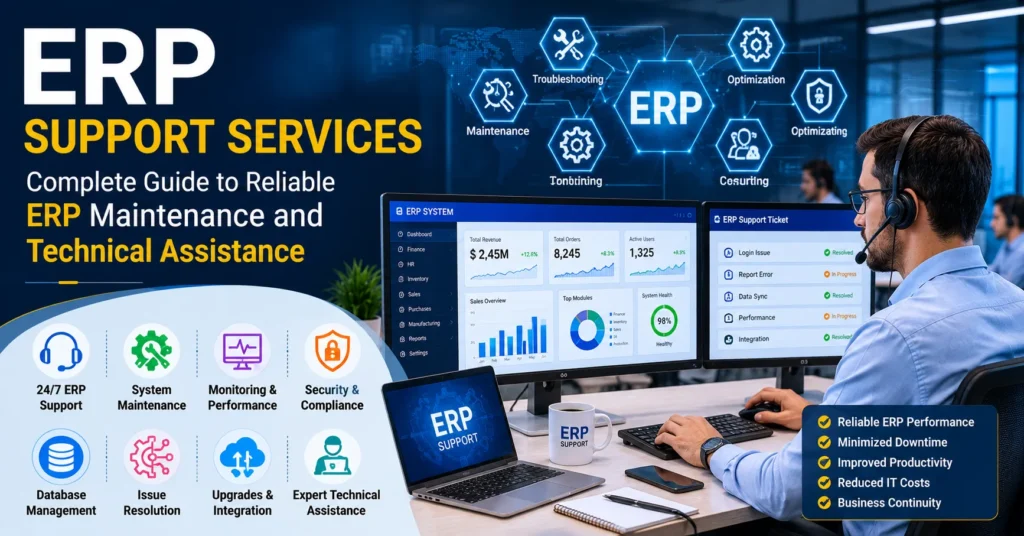
ERP support services provide organizations with expert assistance for troubleshooting, maintenance, system optimization, upgrades, integrations, security management, and user support. Whether a company uses cloud-based ERP software or an on-premise solution, ongoing support is essential for minimizing downtime and maximizing return on investment.
In this comprehensive guide, we’ll explore ERP support services, their benefits, common challenges, support models, and best practices for maintaining a reliable ERP environment.
What Are ERP Support Services?
ERP support services refer to a range of technical and functional assistance provided to businesses using ERP systems. These services help organizations maintain smooth operations, resolve technical issues, optimize workflows, and ensure that ERP software aligns with evolving business needs.
ERP support typically includes:
- Technical troubleshooting
- Application maintenance
- System monitoring
- Performance optimization
- User support and training
- Software updates
- Security management
- Data backup and recovery
- Integration support
- Customization assistance
The primary goal of ERP support is to keep the system running efficiently while minimizing disruptions that can impact business operations.
Why ERP Support Services Are Important
ERP systems manage mission-critical business functions. Even minor disruptions can affect productivity, customer satisfaction, financial reporting, and decision-making.
Professional ERP support services help organizations:
Reduce Downtime
Quick issue resolution prevents operational interruptions and minimizes revenue losses caused by system outages.
Improve Productivity
Employees can continue working efficiently when ERP problems are resolved promptly.
Enhance System Performance
Regular optimization ensures faster processing speeds and improved system responsiveness.
Strengthen Security
ERP support teams help implement security updates, monitor vulnerabilities, and protect sensitive business data.
Ensure Compliance
Many industries require compliance with regulatory standards. ERP support helps maintain compliance through proper system management and reporting.
Maximize ROI
Businesses gain greater value from their ERP investment through continuous improvement and optimization.
Common ERP Challenges Businesses Face
Organizations often encounter various challenges after ERP implementation.
System Performance Issues
Slow response times can frustrate users and reduce productivity.
Common causes include:
- Database inefficiencies
- Network bottlenecks
- Excessive customizations
- Resource limitations
ERP support specialists identify root causes and implement performance improvements.
Integration Problems
Modern businesses rely on multiple software applications.
ERP systems often integrate with:
- CRM platforms
- Payroll software
- E-commerce systems
- Business intelligence tools
- Inventory management applications
Support teams troubleshoot integration failures and maintain data synchronization.
User Errors
Many ERP issues result from improper system usage.
ERP support services provide:
- User guidance
- Training assistance
- Process documentation
- Workflow recommendations
This reduces recurring errors and improves adoption rates.
Data Accuracy Issues
Incorrect data can impact reporting and business decisions.
Support specialists help:
- Validate data integrity
- Correct inconsistencies
- Manage imports and exports
- Implement data governance practices
Security Threats
ERP systems store valuable business information.
Potential threats include:
- Unauthorized access
- Malware attacks
- Phishing attempts
- Data breaches
ERP support teams help strengthen security controls and monitor system health.
Types of ERP Support Services
Businesses require different levels of ERP support depending on their needs.
Technical ERP Support
Technical support focuses on system functionality and infrastructure.
Services include:
- Error resolution
- Database management
- Server monitoring
- Performance tuning
- System diagnostics
Technical specialists ensure ERP software operates reliably.
Functional ERP Support
Functional support helps users utilize ERP features effectively.
Examples include:
- Workflow optimization
- Process configuration
- Report customization
- User management
- Module assistance
Functional consultants bridge the gap between technology and business operations.
Application Maintenance
ERP applications require ongoing maintenance to remain stable and secure.
Maintenance services include:
- Software patching
- Bug fixes
- Feature enhancements
- Version updates
- Configuration reviews
Regular maintenance helps prevent future issues.
ERP Monitoring Services
Proactive monitoring identifies potential problems before they become critical.
Monitoring includes:
- System availability
- Resource utilization
- Database performance
- Security events
- Error logs
Continuous monitoring reduces unexpected downtime.
ERP Upgrade Support
ERP software vendors regularly release updates and new versions.
Upgrade support helps organizations:
- Plan upgrades
- Test compatibility
- Migrate data
- Minimize disruptions
- Train users
Successful upgrades improve functionality and security.
ERP Support for Different Industries
ERP support requirements vary across industries.
Manufacturing
Manufacturers rely on ERP systems for:
- Production planning
- Inventory management
- Supply chain coordination
- Quality control
ERP support ensures uninterrupted production operations.
Retail
Retail businesses use ERP platforms for:
- Order management
- Inventory tracking
- Customer data management
- Financial reporting
Support teams help maintain real-time inventory visibility and sales operations.
Healthcare
Healthcare organizations require secure and compliant ERP environments.
Support services help manage:
- Financial operations
- Procurement
- Human resources
- Regulatory compliance
Financial Services
Financial institutions demand high levels of accuracy and security.
ERP support assists with:
- Reporting systems
- Audit requirements
- Data protection
- Risk management
Logistics and Distribution
Logistics companies depend on ERP systems for:
- Fleet management
- Warehouse operations
- Shipment tracking
- Procurement
Reliable support minimizes disruptions across supply chains.
Key Features of Professional ERP Support Services
A quality ERP support provider offers several essential features.
24/7 Technical Assistance
Round-the-clock support helps businesses address critical issues quickly.
Benefits include:
- Faster resolution times
- Reduced downtime
- Global operational coverage
Dedicated Support Team
Dedicated specialists become familiar with the organization’s ERP environment.
Advantages include:
- Personalized service
- Faster troubleshooting
- Better system understanding
Incident Management
Structured incident management processes ensure efficient issue resolution.
Typical stages include:
- Issue identification
- Ticket creation
- Root cause analysis
- Resolution
- Documentation
Service Level Agreements (SLAs)
SLAs define expected support performance.
Common metrics include:
- Response times
- Resolution times
- System availability
- Escalation procedures
SLAs provide accountability and transparency.
ERP Support for Cloud-Based Systems
Cloud ERP platforms continue to grow in popularity.
Benefits of cloud ERP support include:
- Remote troubleshooting
- Automated updates
- Enhanced scalability
- Reduced infrastructure costs
- Improved accessibility
Cloud ERP support providers help businesses maximize these advantages.
ERP Support for On-Premise Systems
Many organizations still rely on on-premise ERP solutions.
Support services typically include:
- Server maintenance
- Database administration
- Network troubleshooting
- Security monitoring
- Backup management
These services ensure stable performance and business continuity.
ERP Security Support Services
Cybersecurity remains a major concern for businesses.
ERP security support focuses on:
Access Control
Managing user permissions helps prevent unauthorized access.
Security Updates
Regular patching addresses vulnerabilities before attackers exploit them.
Threat Monitoring
Continuous monitoring helps detect suspicious activity.
Data Protection
Support teams implement encryption, backups, and recovery procedures.
ERP Disaster Recovery and Backup Services
Data loss can severely impact business operations.
ERP disaster recovery services include:
- Automated backups
- Recovery testing
- Business continuity planning
- Data restoration support
Effective recovery strategies reduce operational risks.
ERP Integration Support
ERP systems often connect with multiple business applications.
Support services assist with:
- API management
- Third-party integrations
- Data synchronization
- Integration troubleshooting
Reliable integrations improve operational efficiency and information accuracy.
ERP Customization Support
Organizations frequently customize ERP systems to meet specific business needs.
Customization support includes:
- Workflow modifications
- Custom reports
- Dashboard development
- Module enhancements
- Process automation
Proper support ensures customizations remain stable during upgrades.
Benefits of Outsourcing ERP Support Services
Many businesses choose outsourced ERP support providers.
Benefits include:
Cost Savings
Outsourcing eliminates the need for large in-house support teams.
Access to Experts
Businesses gain access to specialized ERP professionals.
Scalability
Support resources can expand as business needs grow.
Faster Problem Resolution
Experienced specialists can quickly diagnose and resolve issues.
Focus on Core Operations
Internal teams can focus on strategic initiatives rather than technical troubleshooting.
How to Choose an ERP Support Provider
Selecting the right support partner is critical.
Consider the following factors:
ERP Expertise
Choose providers with experience supporting your ERP platform.
Industry Knowledge
Industry-specific expertise improves support effectiveness.
Support Availability
Look for providers offering 24/7 assistance if needed.
Response Times
Review SLA commitments carefully.
Customer Reviews
Research client feedback and case studies.
Security Standards
Ensure the provider follows strong cybersecurity practices.
Best Practices for Effective ERP Support
Organizations can maximize ERP performance by following proven practices.
Conduct Regular Health Checks
Periodic system reviews identify improvement opportunities.
Maintain Documentation
Detailed documentation accelerates troubleshooting.
Train Users Continuously
Well-trained users generate fewer support tickets.
Implement Strong Security Policies
Security best practices reduce risk exposure.
Monitor Performance Metrics
Tracking system performance helps identify trends and potential issues.
Plan Upgrades Strategically
Testing and planning reduce upgrade-related disruptions.
Future Trends in ERP Support Services
ERP support continues to evolve alongside technology advancements.
Key trends include:
Artificial Intelligence
AI-powered support tools can automate issue detection and resolution.
Predictive Maintenance
Advanced analytics help identify problems before they occur.
Automation
Routine support tasks are increasingly automated.
Enhanced Cybersecurity
Organizations continue investing in stronger ERP security measures.
Cloud-First Support Models
Cloud ERP adoption is driving demand for remote support services.
Conclusion
ERP systems play a vital role in managing modern business operations, but maintaining their performance requires ongoing attention and expertise. Professional ERP support services help organizations reduce downtime, improve productivity, strengthen security, optimize workflows, and maximize their ERP investment.
Whether a business operates a cloud-based ERP platform or an on-premise solution, reliable support ensures that critical processes continue running smoothly. By partnering with experienced ERP support professionals, organizations can overcome technical challenges, adapt to changing business requirements, and achieve long-term operational success.
As ERP technologies continue to evolve, businesses that invest in proactive support, monitoring, security, and optimization will be better positioned to remain competitive, efficient, and resilient in today’s rapidly changing digital landscape.