
Introduction
Enterprise Resource Planning (ERP) systems are at the heart of modern business operations, helping organizations manage finance, inventory, supply chains, customer relationships, human resources, and more from a centralized platform. However, as technology evolves, businesses often outgrow legacy ERP systems or require more advanced features, better scalability, improved security, and cloud capabilities. This is where ERP migration services become essential.
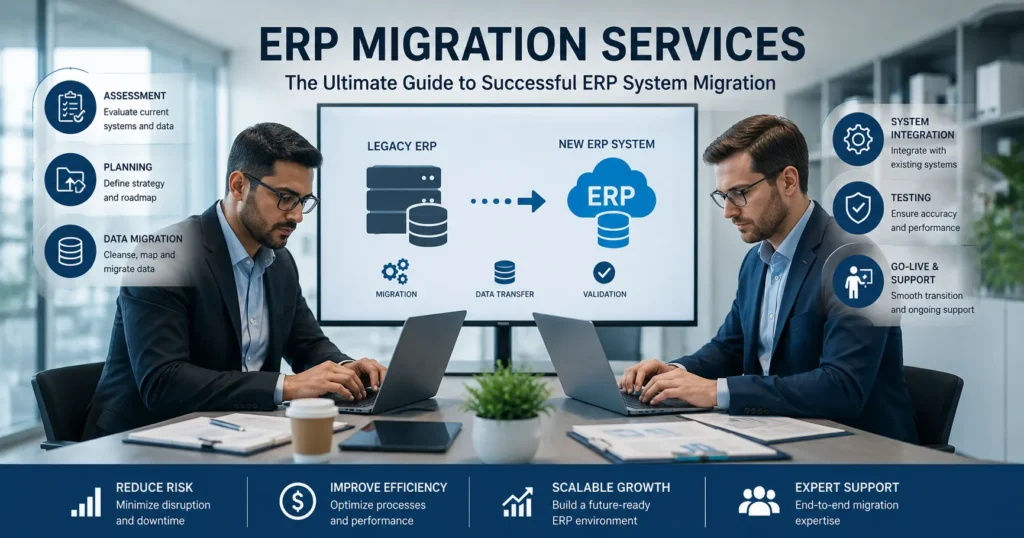
ERP migration is the process of moving data, workflows, configurations, and business processes from an existing ERP system to a newer platform. Whether an organization is upgrading to a newer version of its current ERP software, migrating from an on-premise solution to the cloud, or replacing a legacy system entirely, successful migration requires careful planning, technical expertise, and ongoing support.
In this comprehensive guide, we’ll explore ERP migration services, migration strategies, benefits, challenges, best practices, and how businesses can achieve a smooth transition while minimizing risks and operational disruptions.
What Are ERP Migration Services?
ERP migration services involve the planning, execution, and management of transferring business data, applications, processes, and configurations from one ERP environment to another.
Migration projects may include:
- Legacy ERP replacement
- Cloud ERP migration
- ERP version upgrades
- Database migration
- Multi-system consolidation
- ERP platform modernization
- Hybrid ERP transitions
- Business process transformation
ERP migration specialists ensure that critical business data and operations move accurately and securely while maintaining business continuity.
Why Businesses Need ERP Migration Services
Many organizations continue operating on outdated ERP systems that no longer meet modern business demands.
Common reasons for ERP migration include:
Legacy System Limitations
Older ERP systems may lack functionality, scalability, or vendor support.
Cloud Adoption
Businesses increasingly move to cloud ERP solutions for flexibility and cost efficiency.
Performance Improvements
Modern ERP platforms offer faster processing and improved user experiences.
Enhanced Security
New ERP systems provide stronger security features and compliance capabilities.
Business Growth
Expanding organizations often require ERP solutions that can support increased workloads and complexity.
Digital Transformation Initiatives
ERP migration is often a key component of broader digital transformation strategies.
Understanding ERP Migration
ERP migration is much more than transferring data from one system to another.
A successful migration typically involves:
- Business process analysis
- Data assessment
- System configuration
- Workflow redesign
- User training
- Application integration
- Testing and validation
- Change management
ERP migration services ensure all these components work together effectively.
Types of ERP Migration Services
Organizations choose different migration approaches depending on their goals and existing systems.
ERP Upgrade Migration
This involves upgrading from an older version of an ERP system to a newer release.
Benefits include:
- Enhanced functionality
- Security improvements
- Better performance
- Vendor support continuity
Upgrade migrations are often less disruptive than full platform replacements.
Cloud ERP Migration
Cloud migration involves moving ERP workloads from on-premise infrastructure to cloud environments.
Advantages include:
- Reduced hardware costs
- Improved scalability
- Automatic updates
- Remote accessibility
- Greater flexibility
Cloud ERP adoption continues to grow across industries.
Legacy ERP Replacement
Organizations sometimes replace outdated ERP systems entirely.
Common reasons include:
- Obsolete technology
- Limited customization options
- Lack of support
- Poor user experience
Replacement projects often involve significant process improvements.
Multi-System Consolidation
Businesses operating multiple ERP systems may consolidate them into a single platform.
Benefits include:
- Simplified operations
- Reduced maintenance costs
- Improved reporting
- Better data consistency
Consolidation supports organizational efficiency and visibility.
Hybrid ERP Migration
Some businesses maintain a combination of cloud and on-premise ERP environments.
Hybrid migration services help organizations:
- Integrate systems
- Manage data synchronization
- Maintain compliance
- Optimize performance
Hybrid strategies offer flexibility while supporting specialized requirements.
ERP Migration Process
ERP migration projects follow a structured methodology designed to minimize risks.
Phase 1: Assessment and Discovery
The migration process begins with a comprehensive evaluation of the existing environment.
Activities include:
- System inventory
- Data analysis
- Business process review
- Infrastructure assessment
- Stakeholder interviews
The assessment establishes migration requirements and objectives.
Phase 2: Migration Planning
Detailed planning is critical for success.
Migration plans typically include:
- Project timelines
- Resource allocation
- Risk management
- Data migration strategy
- Testing procedures
- Communication plans
A well-defined roadmap helps prevent costly delays.
Phase 3: Data Cleansing and Preparation
Many organizations discover data quality issues during migration.
Preparation activities include:
- Removing duplicate records
- Correcting inaccuracies
- Standardizing formats
- Archiving obsolete information
- Validating data integrity
Clean data improves ERP performance and reporting accuracy.
Phase 4: ERP Configuration
The new ERP environment must be configured according to business requirements.
Configuration tasks include:
- User roles
- Security permissions
- Workflows
- Approval processes
- Reporting structures
Proper configuration supports operational efficiency after migration.
Phase 5: Data Migration
This phase involves transferring information from the old system to the new platform.
Common data categories include:
- Financial records
- Customer information
- Vendor data
- Inventory details
- Employee records
- Historical transactions
Migration specialists use automated tools and validation processes to ensure accuracy.
Phase 6: Integration Setup
Modern ERP systems often connect with multiple applications.
Integrations may include:
- CRM software
- Payroll systems
- E-commerce platforms
- Business intelligence tools
- Supply chain applications
Integration support ensures seamless data flow across systems.
Phase 7: Testing and Validation
Testing is one of the most important migration phases.
Testing activities include:
Functional Testing
Verifies ERP functionality.
Data Validation
Confirms data accuracy after migration.
Performance Testing
Evaluates system responsiveness.
Security Testing
Ensures access controls and protections function correctly.
User Acceptance Testing
Allows employees to verify business processes.
Comprehensive testing reduces go-live risks.
Phase 8: Go-Live Deployment
The ERP system becomes operational during the go-live phase.
Migration support teams assist with:
- System monitoring
- User support
- Issue resolution
- Performance optimization
Close monitoring ensures a stable transition.
Phase 9: Post-Migration Support
Support continues after deployment.
Post-migration services include:
- Performance reviews
- User assistance
- System optimization
- Security monitoring
- Ongoing maintenance
Continuous improvement helps maximize ERP value.
Benefits of ERP Migration Services
ERP migration provides significant advantages when managed effectively.
Improved Operational Efficiency
Modern ERP platforms automate tasks and streamline workflows.
Benefits include:
- Faster processing
- Reduced manual work
- Better collaboration
- Improved productivity
Enhanced Reporting and Analytics
Advanced ERP systems provide real-time visibility into business performance.
Organizations gain:
- Better forecasting
- Improved decision-making
- Custom dashboards
- Advanced analytics
Greater Scalability
Modern ERP solutions support business growth.
Organizations can:
- Add users
- Expand locations
- Increase transaction volumes
- Launch new products
Without major infrastructure investments.
Improved Security
New ERP systems often include:
- Multi-factor authentication
- Role-based access controls
- Encryption technologies
- Threat monitoring
Enhanced security protects sensitive business information.
Reduced IT Costs
Cloud ERP migration can reduce expenses associated with:
- Hardware maintenance
- Software upgrades
- Infrastructure management
- Energy consumption
Lower costs improve overall ROI.
Common ERP Migration Challenges
ERP migration projects can encounter obstacles.
Data Quality Issues
Incomplete or inaccurate data can compromise migration success.
Business Disruptions
Poor planning may interrupt critical operations.
Integration Complexities
Connecting multiple systems can be technically challenging.
User Resistance
Employees may be reluctant to adopt new processes.
Budget Overruns
Unexpected issues can increase project costs.
Timeline Delays
Migration complexity often impacts schedules.
Professional ERP migration services help organizations address these risks proactively.
Cloud ERP Migration Services
Cloud migration has become one of the most requested ERP services.
Why Businesses Choose Cloud ERP
Cloud ERP offers:
- Lower upfront costs
- Automatic updates
- Remote accessibility
- Scalability
- Enhanced disaster recovery
Organizations gain greater flexibility and agility.
Cloud Migration Strategies
Rehosting
Moving existing ERP applications with minimal changes.
Refactoring
Modifying applications to better leverage cloud capabilities.
Replacing
Implementing a completely new cloud ERP platform.
Migration consultants help determine the best approach.
ERP Data Migration Best Practices
Data migration is often the most critical aspect of ERP projects.
Best practices include:
Start Early
Begin data preparation well before migration.
Clean Data Thoroughly
Remove duplicates and inaccuracies.
Define Data Ownership
Assign responsibility for data quality.
Conduct Multiple Test Migrations
Validate migration processes before production deployment.
Verify Results
Confirm accuracy after migration.
These practices reduce errors and improve project outcomes.
ERP Migration for Different Industries
Migration requirements vary by industry.
Manufacturing
Focus areas include:
- Production data
- Inventory records
- Supply chain processes
- Quality management systems
Retail
Retail migrations prioritize:
- Product catalogs
- Customer information
- Sales transactions
- Inventory management
Healthcare
Healthcare organizations emphasize:
- Regulatory compliance
- Financial records
- Workforce management
- Procurement systems
Logistics
Logistics migrations support:
- Warehouse operations
- Shipment tracking
- Fleet management
- Supplier relationships
Industry expertise improves migration effectiveness.
Choosing the Right ERP Migration Partner
Selecting an experienced migration provider is essential.
Consider:
ERP Expertise
Look for specialists familiar with your ERP platform.
Industry Experience
Industry knowledge helps address unique challenges.
Migration Methodology
Proven frameworks improve project success rates.
Security Practices
Ensure strong data protection measures.
Post-Migration Support
Ongoing assistance helps maximize long-term value.
Customer References
Review successful migration case studies.
The right partner can significantly reduce risks and accelerate results.
ERP Migration and Change Management
Technology changes often impact employees.
Change management services help organizations:
- Communicate project goals
- Manage expectations
- Train users
- Encourage adoption
- Reduce resistance
Strong change management improves overall migration success.
Future Trends in ERP Migration Services
ERP migration continues evolving alongside technology innovations.
Artificial Intelligence
AI assists with:
- Data mapping
- Error detection
- Predictive analytics
- Process automation
Automation
Automated migration tools improve speed and accuracy.
Industry-Specific ERP Solutions
Organizations increasingly adopt specialized ERP platforms.
Advanced Security Technologies
Cybersecurity remains a top migration priority.
Hybrid Cloud Environments
Businesses continue adopting mixed cloud and on-premise architectures.
These trends are shaping the future of ERP migration projects.
Measuring ERP Migration Success
Organizations should evaluate migration outcomes using key performance indicators.
Common KPIs include:
- System uptime
- Data accuracy
- User adoption rates
- Process efficiency improvements
- Support ticket volumes
- Financial reporting speed
- Operational cost reductions
- Return on investment
Tracking these metrics helps ensure continuous improvement.
Conclusion
ERP migration services are essential for organizations seeking to modernize technology, improve operational efficiency, strengthen security, and support long-term growth. Whether upgrading an existing ERP platform, replacing a legacy system, or moving to the cloud, successful migration requires strategic planning, technical expertise, and comprehensive support.
A well-executed ERP migration enables businesses to take advantage of advanced features, improved analytics, better scalability, and enhanced collaboration. However, achieving these benefits requires careful attention to data quality, integrations, testing, user training, and change management.
By partnering with experienced ERP migration specialists, organizations can minimize risks, reduce downtime, improve user adoption, and maximize the return on their ERP investment. As digital transformation continues to reshape industries worldwide, ERP migration services remain a critical component of building agile, efficient, and future-ready businesses.