
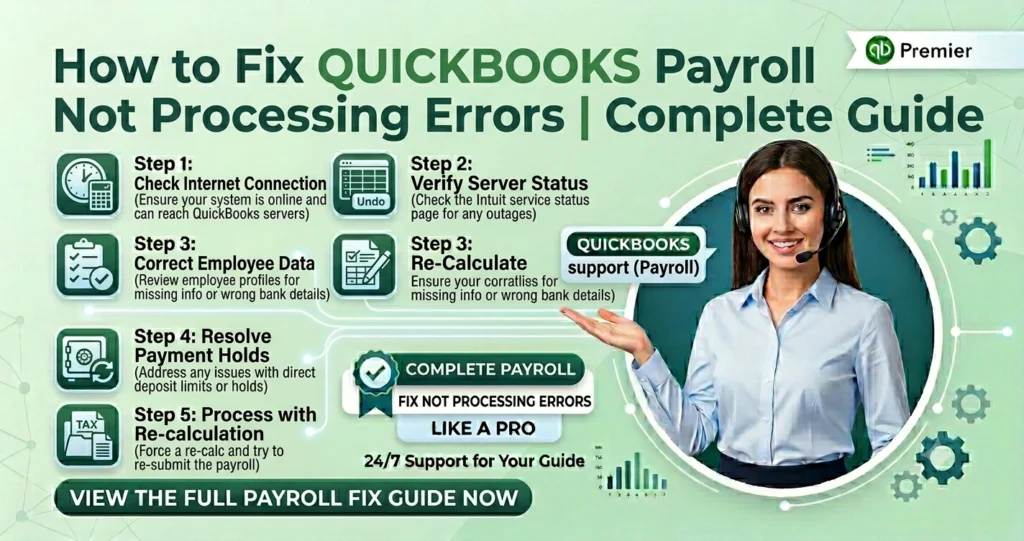
A QuickBooks payroll error happens because of outdated tax tables, internet connectivity problems, incorrect settings in the system, damaged company files, subscription-related issues, company file corruption, and server issues
How to resolve QuickBooks Online Payroll Issues
1. Clear Browser Store and Cookies
Browsers store temporary files, cookies, and stored data. Whereas these files are planned to improve browsing speed, they can interfere with QuickBooks payroll functions.
To decide whether the browser is causing the issue, open QuickBooks in a private browsing window:
If payroll works correctly in private mode, clear your browser’s store and cookies, restart the browser, and try processing payroll again.
2. Review Payroll Tax Settings
Certain state tax rates, such as Family and Medical Leave contributions, will not update correctly in the system. Because of this, payroll processing has stopped unexpectedly.
To check and refresh these settings:
- Open QuickBooks Online.
- Go to Payroll Settings.
- Change the tax rate to a different value temporarily.
- Save the changes in the system
3. Verify Payroll Accounting
Payroll expenses and tax liabilities must be properly linked to the correct accounts. Incorrect account mapping can create errors.
To verify account mapping:
- Open Payroll Settings in system
- Choose Accounting.
- Review wage, tax, and deduction accounts.
- Confirm that each payroll category is assigned to the correct account.
4. Check Internet Connectivity
Slow connections can disrupt communication with Intuit servers and increase payroll processing failures.
Make sure that Your internet connection is active and stable.
Resolving QuickBooks Desktop Payroll Issues
QuickBooks Desktop users experience payroll processing errors due to outdated tax tables and software updates
1. Update Payroll Tax Tables
Payroll tax tables contain current federal, state, and local tax rates. If these tables are outdated, QuickBooks may be unable to calculate payroll correctly.
To update payroll tax tables
- First Open the QuickBooks Desktop.
- Select the Employees section.
- Click Get Payroll Updates.
- Choose Download Entire Update.
2. Update QuickBooks Desktop
To install the latest software updates:
- Open the QuickBooks Desktop.
- Select Help.
- Choose Update QuickBooks Desktop.
- Click Update Now.
3. Use QuickBooks Tool Hub
QuickBooks Tool Hub is planned to identify and repair common software issues.
If payroll processing stops due to crashes, installation problems, or connectivity errors, Tool Hub can help in identifying and resolve the problem.
4. Change to Single-User Mode
Payroll updates and tax form submissions should be performed in Single-User Mode.
If multiple users are accessing the company file simultaneously, conflicts may occur during payroll processing.
To switch modes:
- Open QuickBooks Desktop.
- Select File.
- Choose Change to Single-User Mode.
Tips to Prevent Payroll Processing Errors
Keep Software Updated
Always update and payroll and should be done regularly.Updates include slaty, tax and deductions
Monitor Tax Changes
Federal and state payroll regulations change frequently.If you regularly review the changes there will be accurate calculations.
Back Up Company Data
Create regular backups of your QuickBooks company file. Backups protect your payroll information
Review Employee Information
Incorrect employee details, such as tax withholding information or direct deposit, can cause payroll errors.
Maintain a Stable Internet Connection
For QuickBooks Online users, internet access is important to process payroll transactions
When to Contact QuickBooks Support
The support team can:
- Investigate the payroll error codes
- Identify the server communication problems
- Verify the payroll subscription status
- Escalate the technical issues when necessary
Conclusion QuickBooks payroll errors can be frustrating, but most issues can be resolved. For QuickBooks Online users, clearing the browser store, reviewing tax, and verifying the payroll account solves the problem. For QuickBooks Desktop users, updating payroll tax tables, installing software updates, running QuickBooks Tool Hub, and working in Single-User Mode are the best ways to solve the problem.