
Introduction
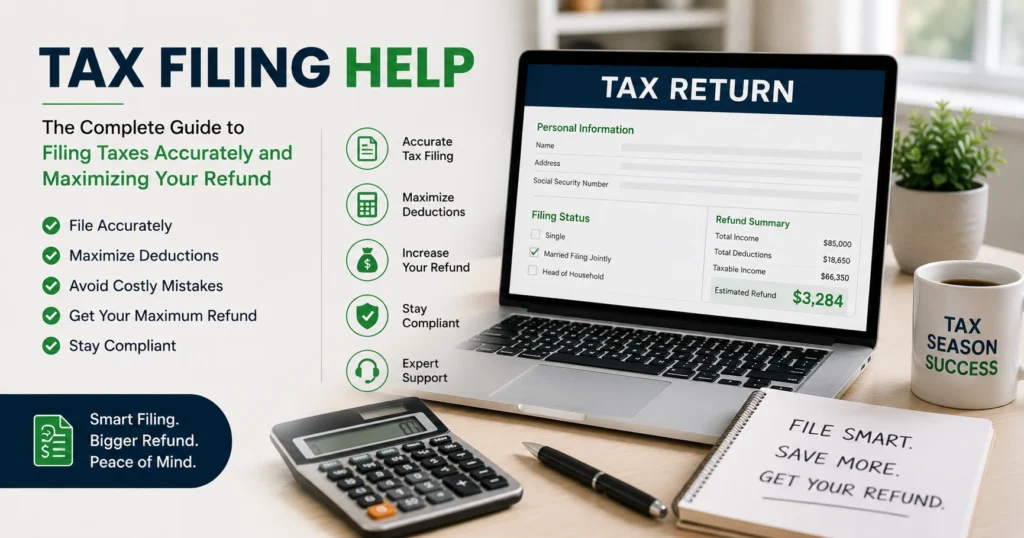
Tax season can be stressful for individuals, freelancers, small business owners, and corporations alike. Gathering documents, understanding tax regulations, identifying deductions, and meeting filing deadlines often feel overwhelming. This is where tax filing help becomes invaluable.
Whether you’re filing taxes for the first time or have years of experience, professional guidance and reliable tax filing resources can help ensure accuracy, compliance, and potential tax savings. A small mistake on a tax return can result in penalties, delayed refunds, or even audits. On the other hand, a properly prepared tax return can maximize deductions and provide peace of mind.
This comprehensive guide explores everything you need to know about tax filing help, including the filing process, common challenges, available assistance options, tax-saving strategies, and best practices for successful tax compliance.
What Is Tax Filing Help?
Tax filing help refers to any assistance provided to individuals or businesses when preparing and submitting tax returns. This assistance can come from:
- Tax professionals
- Certified public accountants (CPAs)
- Tax consultants
- Bookkeepers
- Tax software platforms
- Online tax services
- Government-sponsored assistance programs
The goal is to ensure that tax returns are filed accurately, on time, and in accordance with applicable tax laws.
Tax filing help may include:
- Organizing tax documents
- Calculating taxable income
- Identifying deductions and credits
- Completing tax forms
- Filing returns electronically
- Responding to tax notices
- Managing tax compliance
Professional support can significantly reduce errors while helping taxpayers understand their obligations.
Why Tax Filing Is Important
Tax filing is more than a legal requirement. It plays an essential role in maintaining financial health and compliance.
Legal Compliance
Governments require taxpayers to report income and pay applicable taxes. Failure to file can result in penalties and legal consequences.
Refund Eligibility
Many taxpayers qualify for refunds due to tax withholdings, credits, or overpayments. Filing a return is often necessary to claim these funds.
Financial Documentation
Tax returns serve as proof of income and are commonly required when applying for:
- Loans
- Mortgages
- Credit cards
- Government benefits
Business Operations
Businesses depend on accurate tax filings to maintain good standing with tax authorities and support financial planning.
Who Needs Tax Filing Help?
Almost anyone who earns income can benefit from tax filing assistance.
Employees
Individuals receiving wages from employers often need help understanding deductions and credits.
Freelancers
Independent contractors typically manage self-employment taxes and quarterly payments.
Small Business Owners
Business tax filings often involve complex reporting requirements.
Investors
Investment income introduces additional tax considerations.
Retirees
Pension income, retirement withdrawals, and benefits may require special tax treatment.
High-Income Earners
Complex financial situations often create additional reporting obligations.
Tax filing help can simplify these challenges and reduce the likelihood of mistakes.
Documents You Need Before Filing Taxes
Preparation is the key to an efficient filing process.
Common documents include:
Income Records
- Salary statements
- Contractor income records
- Investment earnings
- Rental income statements
Expense Documentation
- Business expenses
- Medical expenses
- Educational expenses
- Charitable contributions
Banking Information
- Interest income records
- Account details for refunds
Previous Tax Returns
Past filings often provide valuable reference information.
Identification Documents
Taxpayer identification numbers and personal information are required for verification purposes.
Organizing these documents before filing can save considerable time and reduce stress.
Step-by-Step Tax Filing Process
Understanding the filing process makes tax season more manageable.
Step 1: Gather Financial Documents
Collect all records related to income, deductions, and credits.
Step 2: Determine Filing Status
Your filing status affects tax rates and deduction eligibility.
Common statuses include:
- Single
- Married Filing Jointly
- Married Filing Separately
- Head of Household
Step 3: Calculate Taxable Income
Subtract eligible deductions from total income to determine taxable income.
Step 4: Claim Deductions and Credits
Apply all eligible tax benefits.
Step 5: Complete Tax Forms
Fill out the required forms accurately.
Step 6: Review for Errors
Double-check calculations and personal information.
Step 7: Submit Your Return
File electronically or submit paper forms if required.
Step 8: Retain Records
Store copies of filed returns and supporting documents.
Following a structured process improves filing accuracy and reduces complications.
Common Tax Filing Challenges
Many taxpayers encounter obstacles during tax season.
Understanding Tax Laws
Tax regulations change frequently and can be difficult to interpret.
Missing Documentation
Incomplete records may delay filing and increase errors.
Complex Income Sources
Multiple income streams often require additional reporting.
Deduction Uncertainty
Many taxpayers miss valuable deductions due to lack of knowledge.
Deadline Pressure
Waiting until the last minute increases stress and error risk.
Professional tax filing help can address these challenges effectively.
Tax Deductions You Should Know About
Deductions reduce taxable income and can lower overall tax liability.
Common deductions may include:
Business Expenses
Business-related costs may qualify as deductible expenses.
Home Office Expenses
Self-employed individuals working from home may qualify for deductions.
Educational Costs
Certain education-related expenses may be eligible.
Medical Expenses
Qualified medical expenses may be deductible under specific conditions.
Retirement Contributions
Contributions to eligible retirement plans often provide tax benefits.
Charitable Donations
Donations to qualifying organizations may be deductible.
Understanding available deductions can result in significant savings.
Tax Credits That Can Reduce Your Tax Bill
Unlike deductions, credits directly reduce taxes owed.
Popular tax credits may include:
Child-Related Credits
Families with dependents often qualify for valuable credits.
Education Credits
Students and parents may receive education-related tax benefits.
Energy Efficiency Credits
Certain environmentally friendly improvements may qualify.
Low-Income Credits
Governments often provide credits to eligible lower-income taxpayers.
Tax filing help can ensure taxpayers claim all available credits.
Tax Filing Help for Self-Employed Individuals
Self-employed professionals face unique tax responsibilities.
These include:
Self-Employment Taxes
Freelancers may be responsible for additional tax obligations.
Expense Tracking
Maintaining accurate records is essential.
Quarterly Tax Payments
Many self-employed individuals must make estimated tax payments throughout the year.
Business Deductions
Proper identification of deductible expenses can reduce tax liability.
Professional guidance can help self-employed individuals remain compliant while maximizing deductions.
Tax Filing Help for Small Businesses
Business taxes can become increasingly complex as operations grow.
Small businesses often need assistance with:
Payroll Taxes
Employee-related tax obligations must be managed carefully.
Sales Taxes
Businesses may need to collect and remit sales taxes.
Corporate Tax Returns
Separate filing requirements often apply to corporations.
Financial Recordkeeping
Accurate bookkeeping supports successful tax preparation.
Tax Planning
Strategic planning can improve profitability and compliance.
Small businesses frequently benefit from ongoing professional support rather than annual filing assistance alone.
Benefits of Professional Tax Filing Help
Many taxpayers choose professional assistance due to the advantages it offers.
Improved Accuracy
Professionals understand tax laws and filing requirements.
Time Savings
Outsourcing preparation allows taxpayers to focus on other priorities.
Deduction Optimization
Experts often identify deductions and credits that taxpayers overlook.
Reduced Stress
Professional guidance simplifies the filing process.
Audit Support
Tax professionals can assist if questions arise from tax authorities.
The investment in professional help often pays for itself through improved accuracy and tax savings.
Tax Software vs. Professional Tax Services
Many taxpayers wonder whether software or professional assistance is the better option.
Tax Software Advantages
- Lower cost
- Convenience
- Guided filing process
- Electronic submission
Tax Software Limitations
- Limited personalized advice
- Complex situations may be difficult to navigate
Professional Service Advantages
- Expert knowledge
- Personalized recommendations
- Comprehensive support
- Audit assistance
Professional Service Limitations
- Higher cost
- Scheduling requirements
The best choice depends on the complexity of your financial situation.
Common Tax Filing Mistakes to Avoid
Mistakes can lead to delays, penalties, and audits.
Incorrect Personal Information
Misspelled names and incorrect identification numbers create problems.
Reporting Errors
Income omissions are a common issue.
Mathematical Mistakes
Calculation errors can affect refund amounts and tax liability.
Missing Deductions
Overlooking deductions may increase taxes unnecessarily.
Filing Late
Late returns often result in penalties and interest.
Failure to Keep Records
Insufficient documentation can create audit challenges.
Avoiding these errors improves filing outcomes.
What Happens If You Miss a Tax Filing Deadline?
Missing a deadline does not necessarily mean disaster, but action should be taken promptly.
Potential consequences include:
- Late filing penalties
- Interest charges
- Delayed refunds
- Additional compliance requirements
Taxpayers should file as soon as possible and seek professional assistance if needed.
Many jurisdictions offer extensions under certain circumstances.
How to Track Your Tax Refund
After filing, taxpayers often want to know the status of their refund.
Refund tracking typically involves:
- Filing confirmation
- Tax authority processing updates
- Refund issuance notifications
- Direct deposit tracking
Electronic filing generally speeds up refund processing compared to paper submissions.
Best Practices for Successful Tax Filing
Stay Organized Year-Round
Maintain records throughout the year rather than scrambling at tax time.
Use Digital Tools
Cloud-based accounting and document storage systems improve organization.
Review Tax Law Changes
Staying informed can help identify new opportunities and obligations.
File Early
Early filing reduces stress and provides more time to address issues.
Seek Professional Advice
Complex situations often require expert guidance.
Keep Copies of Everything
Maintain tax records for future reference and compliance purposes.
These practices contribute to a smoother filing experience.
The Future of Tax Filing
Technology continues to transform tax preparation and compliance.
Emerging trends include:
Artificial Intelligence
AI-powered tools are improving tax calculations and recommendations.
Automation
Automated bookkeeping and tax reporting reduce manual work.
Cloud-Based Solutions
Remote access improves collaboration and record management.
Real-Time Tax Reporting
Some jurisdictions are moving toward more immediate reporting requirements.
Taxpayers who embrace modern tools can often improve efficiency and accuracy.
Conclusion
Tax filing is an essential financial responsibility that affects individuals, freelancers, and businesses alike. While the process can seem overwhelming, proper preparation and professional tax filing help can simplify compliance and reduce stress.
From gathering documents and calculating income to claiming deductions and submitting returns, each step plays an important role in achieving accurate results. Whether you choose tax software, professional services, or a combination of both, investing in quality tax filing assistance can help maximize refunds, reduce errors, and ensure compliance with tax regulations.
By staying organized, understanding available deductions and credits, and seeking expert guidance when necessary, taxpayers can approach tax season with confidence and achieve better financial outcomes year after year.