
Introduction
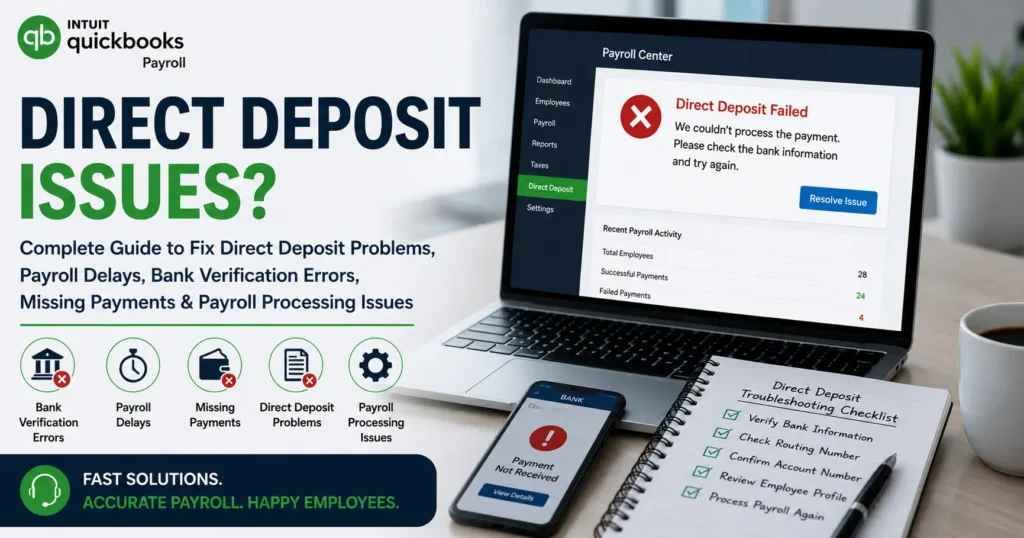
Direct deposit has become the preferred payroll payment method for businesses and employees because it offers speed, convenience, security, and reliability. Instead of issuing paper checks, employers can transfer wages electronically into employees’ bank accounts. However, direct deposit systems are not immune to errors. Businesses frequently encounter direct deposit issues that delay employee payments, create payroll complications, and generate compliance concerns.
When direct deposit problems occur, employers may face employee dissatisfaction, payroll processing delays, bank rejections, tax filing complications, and administrative challenges. Common issues include incorrect bank account information, failed direct deposits, payroll software errors, ACH processing failures, rejected transactions, insufficient funds, and banking verification problems.
This comprehensive guide explains the most common direct deposit issues, their causes, troubleshooting methods, prevention strategies, and best practices for maintaining smooth payroll operations.
What Are Direct Deposit Issues?
Direct deposit issues occur when payroll funds cannot be successfully transferred from an employer’s account to an employee’s bank account.
These issues may include:
- Failed direct deposits
- Missing payroll payments
- ACH rejection errors
- Invalid bank account information
- Routing number errors
- Delayed payroll processing
- Payroll software synchronization problems
- Employee bank verification failures
- Duplicate payments
- Incorrect payment amounts
When these problems arise, employees may not receive their wages on time, requiring immediate attention from payroll administrators.
Common Signs of Direct Deposit Problems
Businesses often notice direct deposit issues through various warning signs:
Payroll Transactions Fail
Payroll processes successfully, but funds are not deposited.
Employee Complaints
Employees report missing wages or delayed payments.
ACH Rejection Notices
Banks return payroll transactions due to invalid information.
Banking Verification Errors
Employee accounts fail validation checks.
Payroll Processing Delays
Payroll batches remain pending longer than expected.
Deposit Amount Discrepancies
Employees receive incorrect payment amounts.
Duplicate Deposits
Multiple payments are sent unintentionally.
Direct Deposit Status Errors
Payroll software displays processing failures or error messages.
Most Common Direct Deposit Issues
1. Incorrect Bank Account Information
One of the most frequent causes of payroll deposit failures is inaccurate employee banking information.
Examples include:
- Wrong account number
- Incorrect routing number
- Closed bank account
- Typographical errors
- Outdated banking details
Solution
Verify employee banking information before payroll processing and require updated authorization forms when changes occur.
2. Invalid Routing Numbers
Routing numbers identify financial institutions during ACH processing.
Incorrect routing numbers may result in:
- Rejected payroll transactions
- Delayed payments
- Returned funds
Solution
Validate routing numbers using official banking databases before processing payroll.
3. Closed Employee Accounts
Employees may change banks without notifying payroll administrators.
When payroll funds are sent to closed accounts:
- Transactions are rejected
- Funds return to the employer
- Employees experience payment delays
Solution
Request employees immediately report banking changes.
4. ACH Processing Failures
Automated Clearing House (ACH) systems facilitate direct deposit transactions.
Failures can occur due to:
- Bank network outages
- ACH file formatting errors
- Processing schedule conflicts
- System maintenance
Solution
Review ACH submission logs and verify payroll files meet banking requirements.
5. Insufficient Employer Funds
Payroll deposits require adequate funding in the employer’s account.
Insufficient balances may cause:
- Payroll rejection
- Deposit delays
- Banking penalties
Solution
Confirm payroll funding availability before payroll transmission.
Payroll Software-Related Direct Deposit Issues
Many payroll problems originate within payroll software systems.
Data Synchronization Errors
Payroll information may not properly sync between modules.
Possible causes:
- Software bugs
- Database corruption
- Interrupted updates
Solution
Update payroll software regularly and perform database maintenance.
Employee Profile Errors
Incorrect employee setup can affect payroll deposits.
Common mistakes:
- Missing bank details
- Wrong payment method
- Incorrect employee classification
Solution
Review employee records before processing payroll.
Outdated Payroll Software
Older software versions may contain:
- Compatibility issues
- Security vulnerabilities
- Banking integration failures
Solution
Install software updates promptly.
Direct Deposit Delays
Sometimes deposits are not rejected but arrive later than expected.
Banking Holidays
Federal holidays can delay ACH processing.
Examples include:
- New Year’s Day
- Memorial Day
- Independence Day
- Labor Day
- Thanksgiving
- Christmas
Solution
Schedule payroll processing earlier during holiday periods.
Weekend Processing Delays
ACH systems typically operate during business days.
Payroll submitted late Friday may process Monday or Tuesday.
Solution
Plan payroll schedules carefully.
Bank Processing Policies
Different banks process deposits at varying speeds.
Some banks:
- Post funds immediately
- Delay funds for verification
Solution
Inform employees of possible banking delays.
Employee Direct Deposit Issues
Missing Payroll Payments
Employees may report:
- No deposit received
- Partial payment received
- Delayed payment
Investigation Steps
- Verify payroll completion.
- Review ACH confirmation reports.
- Confirm employee banking details.
- Contact the receiving bank.
Duplicate Deposits
Duplicate payroll deposits can occur due to:
- Multiple payroll submissions
- Software glitches
- Human error
Solution
Review payroll processing logs and reverse duplicate transactions when necessary.
Incorrect Deposit Amounts
Employees sometimes receive incorrect payroll amounts due to:
- Tax calculation errors
- Overtime miscalculations
- Deduction mistakes
- Payroll setup errors
Solution
Conduct payroll audits before processing.
Banking Verification Errors
Banks often require account verification.
Verification failures may occur because of:
- Name mismatches
- Invalid account status
- Incorrect account ownership
Solution
Ensure employee names exactly match banking records.
Direct Deposit Security Issues
Cybersecurity threats can affect payroll operations.
Common threats include:
Payroll Fraud
Attackers may alter employee banking information.
Phishing Attacks
Fraudulent emails target payroll administrators.
Account Takeovers
Unauthorized users gain payroll system access.
Solution
Implement:
- Multi-factor authentication
- Access controls
- Employee verification procedures
- Regular security audits
Tax Implications of Direct Deposit Problems
Direct deposit issues can affect payroll tax compliance.
Potential consequences:
- Late payroll tax deposits
- Incorrect wage reporting
- Tax filing errors
- Government penalties
Solution
Resolve payroll deposit issues immediately and maintain accurate payroll records.
How to Troubleshoot Direct Deposit Issues
Step 1: Review Payroll Reports
Check:
- Employee payment details
- Payroll batch status
- Deposit confirmations
Step 2: Verify Employee Information
Confirm:
- Account numbers
- Routing numbers
- Employee names
Step 3: Check Payroll Software
Review:
- Error logs
- Processing reports
- Software updates
Step 4: Contact Financial Institutions
Banks can verify:
- Transaction status
- Account validity
- ACH rejection reasons
Step 5: Reprocess Failed Transactions
After correcting errors:
- Generate new payroll files
- Submit corrected transactions
- Monitor deposit confirmations
Best Practices to Prevent Direct Deposit Problems
Verify Employee Banking Data
Validate account information before payroll processing.
Conduct Payroll Audits
Regular audits identify errors early.
Maintain Updated Payroll Software
Updates improve compatibility and security.
Train Payroll Staff
Proper training reduces human errors.
Monitor Payroll Reports
Review reports before final payroll submission.
Maintain Payroll Documentation
Keep detailed payroll records for audits and troubleshooting.
Use Secure Authentication
Protect payroll systems from unauthorized access.
Benefits of Proper Direct Deposit Management
Businesses that manage direct deposits effectively enjoy:
- Faster payroll processing
- Improved employee satisfaction
- Reduced payroll errors
- Better compliance
- Lower administrative costs
- Enhanced security
- Increased operational efficiency
Frequently Asked Questions (FAQs)
Why is my direct deposit pending?
Pending deposits may result from ACH processing schedules, banking verification procedures, holidays, or payroll submission delays.
What happens if direct deposit fails?
The transaction may be rejected and returned to the employer, requiring correction and resubmission.
Can incorrect account information delay payroll?
Yes. Invalid account numbers or routing numbers are among the most common causes of direct deposit failures.
How long does it take to resolve a failed direct deposit?
Resolution time varies but typically ranges from one to several business days depending on the bank and payroll provider.
Can direct deposits be reversed?
In some situations, duplicate or incorrect deposits can be reversed following banking regulations and payroll policies.
How can businesses avoid direct deposit issues?
By validating employee information, maintaining updated payroll systems, monitoring payroll reports, and following payroll best practices.
Conclusion
Direct deposit issues can disrupt payroll operations, create employee dissatisfaction, and expose businesses to compliance risks. Whether the problem involves failed ACH transactions, incorrect bank information, delayed deposits, payroll software errors, security concerns, or tax complications, prompt troubleshooting is essential.
By implementing strong payroll controls, validating banking information, maintaining updated payroll systems, monitoring payroll reports, and following payroll best practices, organizations can minimize direct deposit problems and ensure employees receive accurate and timely payments. Businesses that proactively address payroll challenges enjoy smoother payroll operations, better compliance, improved employee trust, and greater overall efficiency.