
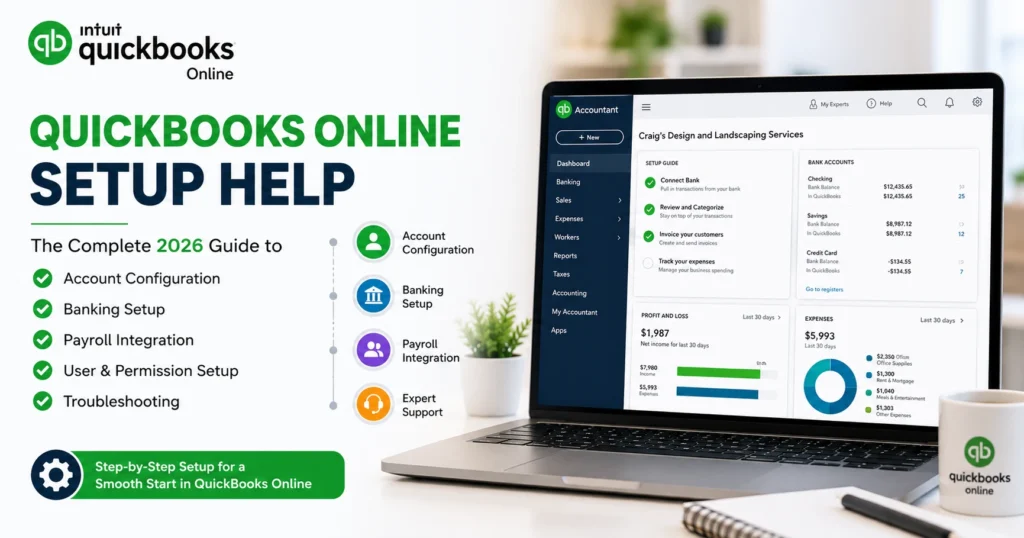
Introduction
Setting up accounting software correctly is one of the most important steps for any business. Whether you are a startup, freelancer, small business owner, or growing enterprise, having an organized financial system can save countless hours and help avoid costly mistakes. This is where QuickBooks Online Setup Help becomes essential.
QuickBooks Online is one of the most widely used cloud-based accounting solutions available today. It helps businesses manage income, expenses, invoices, payroll, taxes, banking transactions, and financial reporting from a single platform. However, many users struggle during the initial setup process. Incorrect settings, improperly configured accounts, or missing integrations can lead to inaccurate financial records and reporting issues later.
This comprehensive guide explains everything you need to know about QuickBooks Online setup, including account creation, company configuration, bank connections, payroll integration, troubleshooting common setup problems, and best practices for maintaining accurate financial records.
What Is QuickBooks Online?
QuickBooks Online is a cloud-based accounting platform designed to help businesses manage their finances efficiently. Unlike traditional desktop software, QuickBooks Online allows users to access financial information from any internet-connected device.
Key Features
- Expense tracking
- Income management
- Invoice creation
- Payment processing
- Payroll management
- Inventory tracking
- Tax preparation
- Financial reporting
- Bank account synchronization
- Multi-user access
Who Uses QuickBooks Online?
QuickBooks Online is suitable for:
- Freelancers
- Consultants
- Small business owners
- Contractors
- E-commerce businesses
- Professional service firms
- Nonprofit organizations
- Growing enterprises
Why Proper QuickBooks Online Setup Matters
Many business owners rush through the setup process. Unfortunately, mistakes made during implementation often create accounting issues later.
Benefits of Proper Setup
Accurate Financial Reporting
Correct setup ensures reports reflect your business’s true financial position.
Better Tax Compliance
Proper tax settings help reduce filing errors and potential penalties.
Improved Cash Flow Tracking
Bank connections and transaction categorization provide real-time financial visibility.
Reduced Manual Work
Automation features save significant time on bookkeeping tasks.
Scalability
A properly configured system grows alongside your business.
Step 1: Create Your QuickBooks Online Account
The first step is creating your QuickBooks Online account.
Choose the Right Subscription Plan
QuickBooks Online typically offers several plans:
- Simple Start
- Essentials
- Plus
- Advanced
Select a plan based on:
- Number of users
- Payroll requirements
- Inventory needs
- Reporting complexity
- Business size
Enter Business Information
Provide:
- Business name
- Industry type
- Business address
- Contact details
- Tax identification information
Verify Account Information
Review all information carefully before proceeding.
Step 2: Configure Company Settings
Company settings form the foundation of your accounting system.
Business Profile Setup
Add:
- Legal business name
- Business type
- Employer Identification Number (EIN)
- Contact information
Accounting Preferences
Choose:
Accounting Method
Cash Basis
Revenue is recognized when money is received.
Accrual Basis
Revenue is recognized when earned.
Fiscal Year Configuration
Select the correct:
- Fiscal year start date
- Reporting period
- Tax year settings
Currency Settings
Businesses operating internationally should configure currency preferences before entering transactions.
Step 3: Set Up Your Chart of Accounts
The Chart of Accounts is the backbone of your accounting system.
Account Categories
Common categories include:
Assets
- Cash
- Accounts Receivable
- Inventory
- Equipment
Liabilities
- Loans
- Credit Cards
- Accounts Payable
Income
- Product Sales
- Service Revenue
- Interest Income
Expenses
- Rent
- Payroll
- Utilities
- Marketing
Customize Accounts
Create custom accounts specific to your industry and business operations.
Step 4: Connect Your Bank Accounts
Bank integration is one of QuickBooks Online’s most valuable features.
Benefits of Bank Connections
- Automatic transaction imports
- Reduced manual data entry
- Real-time account balances
- Faster reconciliation
Connecting a Bank Account
- Open Banking menu.
- Select Connect Account.
- Search for your financial institution.
- Enter online banking credentials.
- Choose accounts to connect.
- Confirm synchronization.
Common Banking Setup Issues
Bank Not Listed
Some financial institutions may require manual import methods.
Connection Errors
Possible causes include:
- Incorrect credentials
- Bank maintenance
- Security restrictions
- Multi-factor authentication issues
Step 5: Import Customers, Vendors, and Products
Instead of entering data manually, import information directly.
Customer Import
Include:
- Customer names
- Contact information
- Billing addresses
- Payment terms
Vendor Import
Add:
- Supplier information
- Tax details
- Contact records
Product and Service Setup
Configure:
- Product names
- Pricing
- Tax categories
- Inventory tracking options
Data Import Tips
- Remove duplicates
- Verify formatting
- Validate imported records
Step 6: Configure Invoicing and Payments
Professional invoicing improves cash flow and customer experience.
Create Invoice Templates
Customize:
- Company logo
- Brand colors
- Payment instructions
- Contact information
Enable Online Payments
Allow customers to pay through:
- Credit cards
- Debit cards
- ACH transfers
- Digital payment methods
Set Up Recurring Invoices
Ideal for:
- Subscription services
- Monthly retainers
- Membership organizations
Automated Payment Reminders
Reduce overdue invoices by enabling automatic reminder schedules.
Step 7: Set Up Payroll
Payroll setup is critical for businesses with employees.
Employee Information
Enter:
- Employee names
- Tax information
- Pay rates
- Direct deposit details
Payroll Schedule
Create:
- Weekly payroll
- Biweekly payroll
- Semi-monthly payroll
- Monthly payroll
Tax Configuration
Configure:
- Federal taxes
- State taxes
- Local taxes
- Employer contributions
Direct Deposit Setup
Enable secure electronic payments for employees.
Step 8: Configure Sales Tax
Sales tax settings vary based on location and business type.
Tax Agencies
Add applicable tax authorities.
Tax Rates
Configure:
- State rates
- County rates
- City rates
- Special district taxes
Automated Sales Tax
QuickBooks Online can automatically calculate sales tax in many jurisdictions.
Step 9: Set Up User Roles and Permissions
Not every employee needs full access.
Common User Roles
Administrator
Full access to all company data.
Standard User
Limited operational access.
Reports User
View-only access to reports.
Time Tracking User
Access restricted to time entries.
Security Best Practices
- Use strong passwords
- Enable multi-factor authentication
- Review permissions regularly
Step 10: Customize Financial Reports
Reports help business owners make informed decisions.
Profit and Loss Report
Shows:
- Revenue
- Expenses
- Net profit
Balance Sheet
Displays:
- Assets
- Liabilities
- Equity
Cash Flow Report
Tracks:
- Cash inflows
- Cash outflows
Accounts Receivable Aging
Identifies overdue customer balances.
Accounts Payable Aging
Monitors unpaid vendor invoices.
Common QuickBooks Online Setup Problems
Even experienced users encounter challenges during setup.
Banking Connection Failures
Possible causes include:
- Expired credentials
- Bank security changes
- Unsupported institutions
Duplicate Transactions
Often caused by:
- Multiple imports
- Reconnected accounts
- Incorrect synchronization settings
Payroll Errors
Common issues include:
- Incorrect employee details
- Missing tax information
- Payroll subscription problems
Sales Tax Problems
Errors frequently result from:
- Incorrect tax jurisdictions
- Outdated tax rates
- Improper product tax settings
User Access Issues
Permission conflicts can prevent users from accessing required features.
How to Troubleshoot QuickBooks Online Setup Issues
Verify Account Settings
Review all setup sections systematically.
Refresh Bank Connections
Disconnect and reconnect problematic accounts.
Reconcile Accounts Regularly
Monthly reconciliation helps identify discrepancies early.
Review Audit Logs
Audit logs reveal changes made by users.
Update Business Information
Keep tax and contact information current.
Benefits of Professional QuickBooks Online Setup Help
Many businesses choose professional setup assistance to ensure accuracy.
Faster Implementation
Experts can complete setup significantly faster.
Reduced Errors
Professional configuration minimizes future accounting problems.
Industry-Specific Customization
Experts tailor settings to your business needs.
Compliance Support
Proper setup supports tax and regulatory compliance.
Employee Training
Professionals often provide onboarding and training support.
Best Practices After Setup
Perform Monthly Reconciliations
Compare bank statements with QuickBooks records.
Review Financial Reports
Analyze performance regularly.
Monitor Cash Flow
Track incoming and outgoing funds carefully.
Keep User Permissions Updated
Remove access for former employees.
Back Up Important Documents
Store invoices, receipts, and tax records securely.
Stay Current with Software Updates
Use the latest QuickBooks Online features and security enhancements.
QuickBooks Online Setup Checklist
Before going live, verify the following:
✔ Business information entered correctly
✔ Fiscal year configured
✔ Chart of accounts customized
✔ Bank accounts connected
✔ Customers imported
✔ Vendors imported
✔ Products and services added
✔ Invoices configured
✔ Payment methods enabled
✔ Payroll setup completed
✔ Sales tax settings verified
✔ User permissions assigned
✔ Financial reports tested
✔ Initial reconciliation performed
Frequently Asked Questions
How long does QuickBooks Online setup take?
Basic setup may take a few hours, while complex businesses often require several days to complete configuration and testing.
Can I migrate from QuickBooks Desktop?
Yes. QuickBooks Online provides migration tools to transfer data from desktop versions.
Can multiple bank accounts be connected?
Absolutely. Most businesses connect checking, savings, and credit card accounts simultaneously.
Is payroll included with QuickBooks Online?
Payroll is typically available as an additional subscription service.
Do I need professional QuickBooks Online setup help?
While many users can complete setup independently, professional assistance can reduce errors and accelerate implementation.
Conclusion
Proper QuickBooks Online implementation is essential for maintaining accurate financial records, improving operational efficiency, and supporting long-term business growth. While the platform is designed to be user-friendly, the setup process involves numerous critical decisions that affect accounting accuracy, tax compliance, reporting quality, and day-to-day financial management.
By following this comprehensive QuickBooks Online Setup Help guide, businesses can create a strong accounting foundation that supports invoicing, payroll, banking, tax management, reporting, and future expansion. Whether you are setting up QuickBooks Online for the first time or reconfiguring an existing account, investing time in proper setup today can save countless hours of troubleshooting and corrections in the future.
A well-configured QuickBooks Online account not only streamlines bookkeeping but also provides valuable financial insights that help business owners make smarter decisions, improve cash flow, and achieve sustainable growth.