
Introduction
Payroll tax filing is one of the most important responsibilities for businesses of all sizes. Whether you run a small business with a few employees or manage a large workforce, accurate payroll tax filing is essential to remain compliant with federal, state, and local tax regulations. Unfortunately, payroll tax filing can be complex, involving tax calculations, withholding requirements, quarterly filings, annual reporting, employee tax forms, employer tax obligations, and ever-changing tax laws.
Many business owners seek payroll tax filing help when they encounter filing errors, missed deadlines, incorrect tax calculations, tax notices, penalties, or payroll software issues. Even a minor mistake can result in costly fines, employee dissatisfaction, and compliance problems.
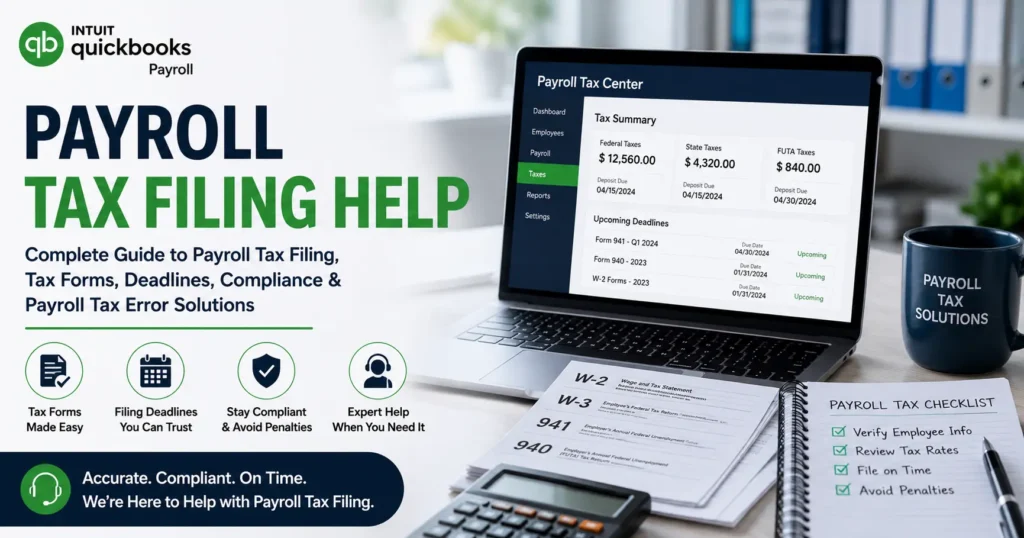
This comprehensive guide explains everything you need to know about payroll tax filing, including common challenges, payroll tax forms, filing deadlines, troubleshooting methods, best practices, and professional payroll tax assistance options.
What Is Payroll Tax Filing?
Payroll tax filing refers to the process of reporting employee wages, tax withholdings, employer tax contributions, and payroll tax liabilities to government agencies.
Employers are responsible for:
- Withholding employee taxes
- Calculating payroll taxes
- Depositing payroll taxes
- Filing payroll tax forms
- Maintaining payroll records
- Meeting tax deadlines
- Reporting payroll information accurately
Payroll tax filing ensures employees receive proper tax credits and governments collect required tax revenues.
Why Payroll Tax Filing Is Important
Proper payroll tax filing helps businesses:
Maintain Compliance
Government agencies require timely and accurate payroll tax reporting.
Avoid Penalties
Late filings and incorrect submissions often result in penalties and interest charges.
Ensure Employee Tax Accuracy
Employees depend on accurate payroll tax reporting for annual tax returns.
Prevent Audits
Accurate filings reduce the likelihood of payroll tax audits.
Protect Business Reputation
Compliance demonstrates professionalism and financial responsibility.
Understanding Payroll Taxes
Payroll taxes generally consist of several components.
Federal Income Tax Withholding
Employers withhold federal income tax from employee wages based on:
- Tax forms
- Filing status
- Income levels
- IRS withholding tables
Social Security Tax
Both employers and employees contribute toward Social Security programs.
These taxes fund retirement and disability benefits.
Medicare Tax
Medicare taxes help finance healthcare programs for eligible individuals.
Employers must withhold and contribute Medicare taxes.
Federal Unemployment Tax (FUTA)
Employers pay unemployment taxes that support unemployment benefit programs.
Employees generally do not contribute to FUTA taxes.
State Payroll Taxes
Many states require:
- State income tax withholding
- State unemployment taxes
- Disability insurance contributions
- Local payroll taxes
Requirements vary by state.
Common Payroll Tax Forms
Payroll tax filing involves several important forms.
Form W-4
Employees complete Form W-4 to determine tax withholding amounts.
This form helps employers calculate federal tax deductions.
Form W-2
Employers provide Form W-2 annually to employees.
It reports:
- Wages earned
- Taxes withheld
- Benefits information
Employees use this form for personal tax filing.
Form 941
Form 941 is one of the most common payroll tax forms.
It reports:
- Federal income tax withholding
- Social Security taxes
- Medicare taxes
Most employers file this form quarterly.
Form 940
Form 940 reports federal unemployment taxes.
Employers generally file it annually.
State Payroll Tax Forms
States often require separate payroll tax filings.
Requirements differ based on jurisdiction.
Common Payroll Tax Filing Problems
Many businesses seek payroll tax filing help because of recurring filing issues.
Incorrect Tax Calculations
Calculation errors may occur due to:
- Outdated tax tables
- Incorrect employee information
- Manual entry mistakes
- Payroll software errors
Late Payroll Tax Filings
Missed filing deadlines can trigger:
- Penalties
- Interest charges
- Compliance notices
Missing Employee Information
Incomplete employee records may result in:
- Filing rejections
- Reporting inaccuracies
- Compliance concerns
Payroll Software Errors
Software issues may cause:
- Incorrect calculations
- Filing failures
- Data corruption
- Tax form generation problems
Tax Deposit Mistakes
Employers must deposit payroll taxes according to established schedules.
Incorrect deposits may trigger enforcement actions.
Payroll Tax Filing Deadlines
Understanding filing deadlines is critical.
Quarterly Filing Deadlines
Most employers file quarterly payroll tax returns.
Common deadlines include:
- April
- July
- October
- January
Late submissions often result in penalties.
Annual Filing Deadlines
Annual forms such as:
- W-2
- W-3
- Form 940
must be filed by specific deadlines.
Employers should verify current IRS requirements annually.
How to Prepare for Payroll Tax Filing
Proper preparation reduces errors and filing delays.
Maintain Accurate Employee Records
Review employee information regularly.
Verify:
- Names
- Addresses
- Social Security numbers
- Tax withholding elections
Reconcile Payroll Reports
Compare:
- Payroll registers
- Tax reports
- Accounting records
Reconciliation helps identify discrepancies before filing.
Review Tax Rates
Tax rates may change frequently.
Always use current tax tables.
Verify Payroll Software Updates
Ensure payroll systems are updated with:
- Tax law changes
- Security patches
- Compliance updates
How Payroll Tax Filing Software Helps
Modern payroll systems simplify filing processes.
Benefits include:
Automated Tax Calculations
Software calculates taxes automatically.
Electronic Filing
Many payroll systems support direct electronic submissions.
Tax Form Generation
Forms can be created automatically.
Compliance Updates
Software providers regularly update tax rules.
Error Detection
Built-in checks help identify filing mistakes.
Common Payroll Tax Error Messages
Businesses may encounter various filing errors.
Tax Filing Rejected
Possible causes:
- Incorrect identification numbers
- Missing information
- Validation failures
Tax Calculation Error
This error may result from:
- Incorrect tax tables
- Employee setup mistakes
- Software issues
Filing Deadline Warning
Payroll systems may alert users to upcoming deadlines.
These reminders help prevent late filings.
How to Fix Payroll Tax Filing Errors
Correct Employee Information
Verify all employee records before filing.
Update Payroll Software
Install current payroll software updates.
Review Tax Settings
Ensure payroll tax settings are configured correctly.
Recalculate Payroll Data
Re-run payroll calculations if discrepancies appear.
Submit Amended Returns
If errors are discovered after filing, employers may need amended returns.
Payroll Tax Penalties and Consequences
Failure to comply with payroll tax requirements may result in:
Financial Penalties
Government agencies impose penalties for:
- Late filings
- Late deposits
- Inaccurate reporting
Interest Charges
Outstanding balances may accumulate interest.
Compliance Audits
Serious errors may trigger payroll tax examinations.
Employee Issues
Incorrect reporting can delay employee tax refunds.
Benefits of Professional Payroll Tax Filing Help
Many businesses choose professional assistance.
Advantages include:
Expert Knowledge
Tax professionals understand current regulations.
Reduced Errors
Professional reviews improve accuracy.
Faster Resolution
Experts can address filing issues quickly.
Audit Support
Professional assistance may help during tax reviews.
Time Savings
Businesses can focus on operations rather than paperwork.
Best Practices for Payroll Tax Compliance
Follow these recommendations:
- File taxes on time
- Keep payroll records organized
- Reconcile payroll reports regularly
- Monitor tax law changes
- Train payroll staff
- Maintain accurate employee records
- Use reliable payroll software
- Conduct periodic audits
These practices help minimize payroll tax risks.
Payroll Tax Filing Checklist
Before filing:
✔ Verify employee information
✔ Review payroll reports
✔ Confirm tax calculations
✔ Check filing deadlines
✔ Update payroll software
✔ Reconcile payroll accounts
✔ Validate tax forms
✔ Back up payroll data
✔ Submit tax deposits
✔ Retain filing records
Frequently Asked Questions
What is payroll tax filing?
Payroll tax filing is the process of reporting employee wages, tax withholdings, and employer tax obligations to government agencies.
What payroll tax forms do employers file?
Common payroll tax forms include Form W-2, Form W-4, Form 941, Form 940, and various state payroll tax forms.
What happens if payroll taxes are filed late?
Late payroll tax filings may result in penalties, interest charges, compliance notices, and possible audits.
How can payroll tax filing software help?
Payroll software automates calculations, generates tax forms, supports electronic filing, and helps maintain compliance.
Why should businesses seek payroll tax filing help?
Professional payroll tax assistance helps reduce errors, improve compliance, resolve tax notices, and streamline payroll operations.
Conclusion
Payroll tax filing is a critical business function that requires accuracy, consistency, and compliance with constantly evolving tax regulations. From calculating payroll taxes and submitting tax deposits to filing quarterly returns and issuing employee tax forms, every step must be completed correctly and on time.
Businesses frequently encounter challenges such as payroll tax calculation errors, filing rejections, missed deadlines, tax notices, software issues, and compliance concerns. Fortunately, with proper preparation, reliable payroll systems, regular audits, and professional payroll tax filing help when needed, these challenges can be effectively managed.
By understanding payroll tax requirements, maintaining accurate records, following filing schedules, and leveraging payroll technology, businesses can reduce risk, avoid penalties, and ensure smooth payroll tax operations throughout the year.