
Introduction
When businesses choose accounting software, one of the first concerns is understanding pricing. Many users search for answers regarding subscription costs, plan differences, billing cycles, hidden charges, upgrades, renewals, and feature limitations. QuickBooks remains one of the most widely used accounting solutions for small businesses, accountants, freelancers, and enterprises, making pricing-related questions extremely common.
Whether you’re considering QuickBooks for the first time or evaluating your current subscription, understanding the pricing structure can help you make informed decisions and avoid unnecessary expenses.
This comprehensive guide answers the most common QuickBooks pricing questions, explains available plans, compares subscription options, discusses billing concerns, and provides practical guidance for selecting the right package based on business needs.
Why Understanding QuickBooks Pricing Matters
Accounting software is more than a monthly expense. It becomes a core component of financial management, payroll processing, invoicing, tax preparation, reporting, and business growth.
Choosing the wrong plan may result in:
- Paying for unnecessary features
- Missing essential business tools
- Additional upgrade costs
- Payroll limitations
- User access restrictions
- Unexpected billing issues
- Integration challenges
Understanding pricing beforehand helps businesses maximize value while minimizing costs.
Common QuickBooks Pricing Questions
Many users frequently ask:
- How much does QuickBooks cost?
- Which QuickBooks plan is best?
- Is QuickBooks worth the price?
- What features come with each plan?
- Are there hidden fees?
- Can I upgrade later?
- Is payroll included?
- Are discounts available?
- How does billing work?
- Can subscriptions be canceled anytime?
Let’s examine these questions in detail.
Understanding QuickBooks Subscription Models
QuickBooks generally offers subscription-based pricing.
Most subscriptions are available through:
Monthly Billing
Users pay recurring monthly fees.
Benefits include:
- Lower upfront cost
- Flexibility
- Easy upgrades
- Easier budgeting
Annual Billing
Some plans offer annual payment options.
Benefits include:
- Potential savings
- Reduced administrative effort
- Predictable budgeting
Businesses should compare both options before purchasing.
QuickBooks Online Pricing Structure
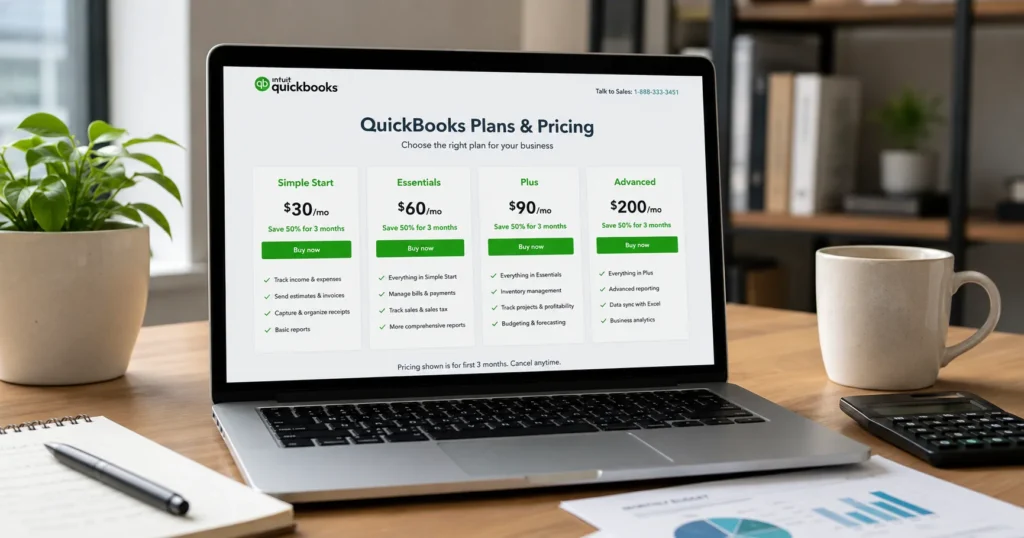
QuickBooks Online typically offers multiple subscription tiers.
Basic Plans
Suitable for:
- Freelancers
- Solopreneurs
- Consultants
Features often include:
- Income tracking
- Expense tracking
- Basic invoicing
- Bank connections
- Financial reporting
Intermediate Plans
Designed for growing businesses.
Features may include:
- Bill management
- Inventory tracking
- Project profitability
- Multiple users
- Enhanced reporting
Advanced Plans
Created for larger organizations.
Capabilities often include:
- Custom reporting
- Workflow automation
- Advanced permissions
- Business analytics
- Higher user limits
QuickBooks Desktop Pricing Questions
Many businesses still prefer desktop versions.
Common questions include:
Is Desktop a One-Time Purchase?
Historically, desktop licenses could be purchased outright.
However, many modern desktop editions operate through subscriptions.
What Influences Desktop Pricing?
Factors include:
- Number of users
- Industry edition
- Payroll integration
- Support packages
- Hosting requirements
Payroll Pricing Questions
Payroll often generates additional costs.
Businesses frequently ask:
Is Payroll Included?
Payroll is typically a separate service.
Depending on the subscription:
- Additional monthly fees may apply
- Per-employee charges may apply
What Affects Payroll Costs?
Factors include:
- Number of employees
- Payroll frequency
- Tax filing services
- Direct deposit options
- Compliance assistance
QuickBooks Live Bookkeeping Costs
Some users seek professional bookkeeping assistance.
Additional bookkeeping services may include:
- Monthly reviews
- Transaction categorization
- Financial statement preparation
- Expert consultations
Pricing depends on:
- Business size
- Transaction volume
- Service level
User-Based Pricing Questions
Many plans have user limitations.
Common questions include:
How Many Users Can Access QuickBooks?
The answer depends on:
- Subscription level
- Desktop edition
- Online edition
Higher-tier plans typically support more users.
Do Additional Users Cost More?
In some situations:
- Upgrading plans may be necessary
- Additional licenses may be required
Hidden Costs Businesses Should Know About
One of the most searched concerns involves hidden fees.
Potential additional expenses may include:
Payroll Services
Separate subscription charges.
Payment Processing
Fees for:
- Credit card payments
- ACH transfers
- Online transactions
Third-Party Applications
Many integrations require separate subscriptions.
Cloud Hosting
Desktop users may pay hosting providers.
Professional Setup Services
Advanced implementations may require expert assistance.
Is QuickBooks Worth the Cost?
Many prospective customers ask whether QuickBooks justifies its pricing.
Benefits include:
Time Savings
Automation reduces manual accounting work.
Better Financial Visibility
Real-time reporting improves decision-making.
Tax Preparation Support
Organized records simplify tax filing.
Business Growth
Scalable features support expanding businesses.
Industry Acceptance
Many accountants and bookkeepers already use QuickBooks.
For most businesses, the productivity gains often outweigh subscription costs.
Comparing QuickBooks Plans
Before selecting a subscription, evaluate:
Business Size
Consider:
- Solo operation
- Small business
- Mid-sized organization
- Enterprise environment
Number of Employees
Payroll needs significantly impact costs.
Reporting Requirements
Advanced reports may require higher-tier plans.
Inventory Management
Inventory features often influence pricing.
User Access Requirements
Multi-user access may necessitate upgrades.
Questions About Discounts and Promotions
Businesses often search for discounts.
Possible promotions may include:
Introductory Discounts
New customers sometimes receive reduced rates.
Seasonal Offers
Special pricing may occur during:
- Tax season
- Year-end promotions
- Small business campaigns
Accountant Programs
Some accounting professionals can provide discounted access.
Always review promotional terms before subscribing.
QuickBooks Upgrade Pricing Questions
As businesses grow, upgrading becomes common.
Reasons for upgrading include:
- More users
- Enhanced reporting
- Payroll expansion
- Inventory management
- Project tracking
Questions often include:
Will Data Transfer Automatically?
In most cases, upgrades maintain existing data.
Is There a Fee to Upgrade?
Pricing differences are typically prorated based on subscription terms.
Downgrade Considerations
Not every business needs premium features forever.
Common downgrade reasons:
- Budget reductions
- Seasonal business changes
- Reduced staffing
Before downgrading, verify:
- Feature availability
- User limits
- Historical data access
- Reporting capabilities
Billing Questions Users Frequently Ask
Billing concerns are among the most common support requests.
Why Was My Card Charged?
Possible reasons include:
- Subscription renewal
- Payroll services
- Add-on products
- Additional users
Why Did My Subscription Renew Automatically?
Many subscriptions automatically renew unless canceled.
How Can I View Billing History?
Users can usually access invoices and payment records through account settings.
Subscription Renewal Questions
Renewal inquiries often involve:
Renewal Dates
Businesses should monitor renewal schedules.
Pricing Changes
Subscription costs may change over time.
Renewal Notifications
Review emails and account alerts regularly.
How to Reduce QuickBooks Costs
Businesses seeking savings can:
Select Appropriate Plans
Avoid paying for unused features.
Review Add-Ons
Remove unnecessary services.
Monitor User Licenses
Reduce inactive accounts.
Evaluate Payroll Needs
Choose payroll services matching workforce size.
Review Third-Party Apps
Eliminate redundant subscriptions.
QuickBooks Online vs Desktop Cost Comparison
Online Advantages
- Cloud access
- Automatic updates
- Remote collaboration
- Flexible subscriptions
Desktop Advantages
- Local data storage
- Familiar workflow
- Industry-specific editions
Pricing comparisons should include:
- Subscription fees
- Hosting expenses
- Payroll costs
- User licenses
- IT maintenance
Pricing Questions from Small Businesses
Small business owners often ask:
What Is the Cheapest Option?
Entry-level subscriptions generally provide basic accounting functions.
Can I Start Small and Upgrade Later?
Yes, many businesses begin with lower-tier plans and expand as needed.
Is QuickBooks Good for Startups?
Many startups appreciate:
- Scalability
- Automation
- Integration capabilities
- Financial reporting
Pricing Questions from Accountants
Accounting professionals often evaluate:
Multi-Client Access
Managing several businesses efficiently.
Accountant Tools
Specialized features for professional workflows.
Reporting Capabilities
Advanced financial analysis tools.
Client Collaboration
Secure data sharing and review options.
Industry-Specific Pricing Considerations
Certain industries may require additional features.
Construction
Needs may include:
- Job costing
- Project management
- Progress invoicing
Retail
Focus areas include:
- Inventory tracking
- Sales reporting
- Vendor management
Professional Services
Often prioritize:
- Time tracking
- Client billing
- Project profitability
Industry requirements can influence the ideal subscription level.
Common Billing Problems and Solutions
Businesses occasionally encounter:
Duplicate Charges
Review account activity and payment history.
Failed Payments
Verify:
- Card validity
- Billing address
- Available funds
Expired Cards
Update payment methods promptly.
Subscription Access Issues
Ensure billing information remains current.
Questions to Ask Before Choosing a Plan
Before subscribing, consider:
- How many users need access?
- Do I require payroll?
- Will I track inventory?
- Do I need advanced reports?
- Is remote access important?
- What integrations are required?
- What is my monthly budget?
- How quickly will my business grow?
Answering these questions helps identify the most cost-effective solution.
Best Practices for Managing QuickBooks Costs
Successful businesses often:
- Review subscriptions annually
- Monitor billing statements
- Remove unnecessary add-ons
- Upgrade only when needed
- Train users effectively
- Evaluate feature usage regularly
These practices ensure maximum return on investment.
Frequently Asked Questions (FAQs)
How much does QuickBooks cost?
Pricing varies depending on subscription level, payroll requirements, user count, and additional services.
Is payroll included in QuickBooks?
Payroll is often offered as a separate add-on service with additional costs.
Can I change my QuickBooks plan later?
Yes, many subscriptions allow upgrades or downgrades as business needs evolve.
Are there discounts available?
Promotional pricing and introductory offers may be available for new customers.
Is QuickBooks Online cheaper than Desktop?
Costs vary depending on user requirements, hosting needs, payroll services, and included features.
Can I cancel my subscription?
Most subscriptions can be canceled, though terms and conditions may vary.
Why did my QuickBooks bill increase?
Possible reasons include subscription renewals, plan upgrades, payroll additions, or pricing adjustments.
Which QuickBooks plan is best for small businesses?
The ideal plan depends on transaction volume, reporting requirements, payroll needs, and growth objectives.
Conclusion
QuickBooks pricing questions are among the most common concerns for business owners, accountants, and financial professionals. Understanding subscription structures, payroll fees, billing practices, user limits, and available features helps organizations make informed decisions while controlling costs.
Whether you’re exploring QuickBooks for the first time, considering an upgrade, reviewing renewal expenses, or comparing plans, careful evaluation of business requirements ensures you select the right solution without overspending. A clear understanding of pricing, billing, and subscription options can help maximize the value of your accounting software investment while supporting long-term business growth.Introduction
When businesses choose accounting software, one of the first concerns is understanding pricing. Many users search for answers regarding subscription costs, plan differences, billing cycles, hidden charges, upgrades, renewals, and feature limitations. QuickBooks remains one of the most widely used accounting solutions for small businesses, accountants, freelancers, and enterprises, making pricing-related questions extremely common.
Whether you’re considering QuickBooks for the first time or evaluating your current subscription, understanding the pricing structure can help you make informed decisions and avoid unnecessary expenses.
This comprehensive guide answers the most common QuickBooks pricing questions, explains available plans, compares subscription options, discusses billing concerns, and provides practical guidance for selecting the right package based on business needs.
Why Understanding QuickBooks Pricing Matters
Accounting software is more than a monthly expense. It becomes a core component of financial management, payroll processing, invoicing, tax preparation, reporting, and business growth.
Choosing the wrong plan may result in:
- Paying for unnecessary features
- Missing essential business tools
- Additional upgrade costs
- Payroll limitations
- User access restrictions
- Unexpected billing issues
- Integration challenges
Understanding pricing beforehand helps businesses maximize value while minimizing costs.
Common QuickBooks Pricing Questions
Many users frequently ask:
- How much does QuickBooks cost?
- Which QuickBooks plan is best?
- Is QuickBooks worth the price?
- What features come with each plan?
- Are there hidden fees?
- Can I upgrade later?
- Is payroll included?
- Are discounts available?
- How does billing work?
- Can subscriptions be canceled anytime?
Let’s examine these questions in detail.
Understanding QuickBooks Subscription Models
QuickBooks generally offers subscription-based pricing.
Most subscriptions are available through:
Monthly Billing
Users pay recurring monthly fees.
Benefits include:
- Lower upfront cost
- Flexibility
- Easy upgrades
- Easier budgeting
Annual Billing
Some plans offer annual payment options.
Benefits include:
- Potential savings
- Reduced administrative effort
- Predictable budgeting
Businesses should compare both options before purchasing.
QuickBooks Online Pricing Structure
QuickBooks Online typically offers multiple subscription tiers.
Basic Plans
Suitable for:
- Freelancers
- Solopreneurs
- Consultants
Features often include:
- Income tracking
- Expense tracking
- Basic invoicing
- Bank connections
- Financial reporting
Intermediate Plans
Designed for growing businesses.
Features may include:
- Bill management
- Inventory tracking
- Project profitability
- Multiple users
- Enhanced reporting
Advanced Plans
Created for larger organizations.
Capabilities often include:
- Custom reporting
- Workflow automation
- Advanced permissions
- Business analytics
- Higher user limits
QuickBooks Desktop Pricing Questions
Many businesses still prefer desktop versions.
Common questions include:
Is Desktop a One-Time Purchase?
Historically, desktop licenses could be purchased outright.
However, many modern desktop editions operate through subscriptions.
What Influences Desktop Pricing?
Factors include:
- Number of users
- Industry edition
- Payroll integration
- Support packages
- Hosting requirements
Payroll Pricing Questions
Payroll often generates additional costs.
Businesses frequently ask:
Is Payroll Included?
Payroll is typically a separate service.
Depending on the subscription:
- Additional monthly fees may apply
- Per-employee charges may apply
What Affects Payroll Costs?
Factors include:
- Number of employees
- Payroll frequency
- Tax filing services
- Direct deposit options
- Compliance assistance
QuickBooks Live Bookkeeping Costs
Some users seek professional bookkeeping assistance.
Additional bookkeeping services may include:
- Monthly reviews
- Transaction categorization
- Financial statement preparation
- Expert consultations
Pricing depends on:
- Business size
- Transaction volume
- Service level
User-Based Pricing Questions
Many plans have user limitations.
Common questions include:
How Many Users Can Access QuickBooks?
The answer depends on:
- Subscription level
- Desktop edition
- Online edition
Higher-tier plans typically support more users.
Do Additional Users Cost More?
In some situations:
- Upgrading plans may be necessary
- Additional licenses may be required
Hidden Costs Businesses Should Know About
One of the most searched concerns involves hidden fees.
Potential additional expenses may include:
Payroll Services
Separate subscription charges.
Payment Processing
Fees for:
- Credit card payments
- ACH transfers
- Online transactions
Third-Party Applications
Many integrations require separate subscriptions.
Cloud Hosting
Desktop users may pay hosting providers.
Professional Setup Services
Advanced implementations may require expert assistance.
Is QuickBooks Worth the Cost?
Many prospective customers ask whether QuickBooks justifies its pricing.
Benefits include:
Time Savings
Automation reduces manual accounting work.
Better Financial Visibility
Real-time reporting improves decision-making.
Tax Preparation Support
Organized records simplify tax filing.
Business Growth
Scalable features support expanding businesses.
Industry Acceptance
Many accountants and bookkeepers already use QuickBooks.
For most businesses, the productivity gains often outweigh subscription costs.
Comparing QuickBooks Plans
Before selecting a subscription, evaluate:
Business Size
Consider:
- Solo operation
- Small business
- Mid-sized organization
- Enterprise environment
Number of Employees
Payroll needs significantly impact costs.
Reporting Requirements
Advanced reports may require higher-tier plans.
Inventory Management
Inventory features often influence pricing.
User Access Requirements
Multi-user access may necessitate upgrades.
Questions About Discounts and Promotions
Businesses often search for discounts.
Possible promotions may include:
Introductory Discounts
New customers sometimes receive reduced rates.
Seasonal Offers
Special pricing may occur during:
- Tax season
- Year-end promotions
- Small business campaigns
Accountant Programs
Some accounting professionals can provide discounted access.
Always review promotional terms before subscribing.
QuickBooks Upgrade Pricing Questions
As businesses grow, upgrading becomes common.
Reasons for upgrading include:
- More users
- Enhanced reporting
- Payroll expansion
- Inventory management
- Project tracking
Questions often include:
Will Data Transfer Automatically?
In most cases, upgrades maintain existing data.
Is There a Fee to Upgrade?
Pricing differences are typically prorated based on subscription terms.
Downgrade Considerations
Not every business needs premium features forever.
Common downgrade reasons:
- Budget reductions
- Seasonal business changes
- Reduced staffing
Before downgrading, verify:
- Feature availability
- User limits
- Historical data access
- Reporting capabilities
Billing Questions Users Frequently Ask
Billing concerns are among the most common support requests.
Why Was My Card Charged?
Possible reasons include:
- Subscription renewal
- Payroll services
- Add-on products
- Additional users
Why Did My Subscription Renew Automatically?
Many subscriptions automatically renew unless canceled.
How Can I View Billing History?
Users can usually access invoices and payment records through account settings.
Subscription Renewal Questions
Renewal inquiries often involve:
Renewal Dates
Businesses should monitor renewal schedules.
Pricing Changes
Subscription costs may change over time.
Renewal Notifications
Review emails and account alerts regularly.
How to Reduce QuickBooks Costs
Businesses seeking savings can:
Select Appropriate Plans
Avoid paying for unused features.
Review Add-Ons
Remove unnecessary services.
Monitor User Licenses
Reduce inactive accounts.
Evaluate Payroll Needs
Choose payroll services matching workforce size.
Review Third-Party Apps
Eliminate redundant subscriptions.
QuickBooks Online vs Desktop Cost Comparison
Online Advantages
- Cloud access
- Automatic updates
- Remote collaboration
- Flexible subscriptions
Desktop Advantages
- Local data storage
- Familiar workflow
- Industry-specific editions
Pricing comparisons should include:
- Subscription fees
- Hosting expenses
- Payroll costs
- User licenses
- IT maintenance
Pricing Questions from Small Businesses
Small business owners often ask:
What Is the Cheapest Option?
Entry-level subscriptions generally provide basic accounting functions.
Can I Start Small and Upgrade Later?
Yes, many businesses begin with lower-tier plans and expand as needed.
Is QuickBooks Good for Startups?
Many startups appreciate:
- Scalability
- Automation
- Integration capabilities
- Financial reporting
Pricing Questions from Accountants
Accounting professionals often evaluate:
Multi-Client Access
Managing several businesses efficiently.
Accountant Tools
Specialized features for professional workflows.
Reporting Capabilities
Advanced financial analysis tools.
Client Collaboration
Secure data sharing and review options.
Industry-Specific Pricing Considerations
Certain industries may require additional features.
Construction
Needs may include:
- Job costing
- Project management
- Progress invoicing
Retail
Focus areas include:
- Inventory tracking
- Sales reporting
- Vendor management
Professional Services
Often prioritize:
- Time tracking
- Client billing
- Project profitability
Industry requirements can influence the ideal subscription level.
Common Billing Problems and Solutions
Businesses occasionally encounter:
Duplicate Charges
Review account activity and payment history.
Failed Payments
Verify:
- Card validity
- Billing address
- Available funds
Expired Cards
Update payment methods promptly.
Subscription Access Issues
Ensure billing information remains current.
Questions to Ask Before Choosing a Plan
Before subscribing, consider:
- How many users need access?
- Do I require payroll?
- Will I track inventory?
- Do I need advanced reports?
- Is remote access important?
- What integrations are required?
- What is my monthly budget?
- How quickly will my business grow?
Answering these questions helps identify the most cost-effective solution.
Best Practices for Managing QuickBooks Costs
Successful businesses often:
- Review subscriptions annually
- Monitor billing statements
- Remove unnecessary add-ons
- Upgrade only when needed
- Train users effectively
- Evaluate feature usage regularly
These practices ensure maximum return on investment.
Frequently Asked Questions (FAQs)
How much does QuickBooks cost?
Pricing varies depending on subscription level, payroll requirements, user count, and additional services.
Is payroll included in QuickBooks?
Payroll is often offered as a separate add-on service with additional costs.
Can I change my QuickBooks plan later?
Yes, many subscriptions allow upgrades or downgrades as business needs evolve.
Are there discounts available?
Promotional pricing and introductory offers may be available for new customers.
Is QuickBooks Online cheaper than Desktop?
Costs vary depending on user requirements, hosting needs, payroll services, and included features.
Can I cancel my subscription?
Most subscriptions can be canceled, though terms and conditions may vary.
Why did my QuickBooks bill increase?
Possible reasons include subscription renewals, plan upgrades, payroll additions, or pricing adjustments.
Which QuickBooks plan is best for small businesses?
The ideal plan depends on transaction volume, reporting requirements, payroll needs, and growth objectives.
Conclusion
QuickBooks pricing questions are among the most common concerns for business owners, accountants, and financial professionals. Understanding subscription structures, payroll fees, billing practices, user limits, and available features helps organizations make informed decisions while controlling costs.
Whether you’re exploring QuickBooks for the first time, considering an upgrade, reviewing renewal expenses, or comparing plans, careful evaluation of business requirements ensures you select the right solution without overspending. A clear understanding of pricing, billing, and subscription options can help maximize the value of your accounting software investment while supporting long-term business growth.Introduction
When businesses choose accounting software, one of the first concerns is understanding pricing. Many users search for answers regarding subscription costs, plan differences, billing cycles, hidden charges, upgrades, renewals, and feature limitations. QuickBooks remains one of the most widely used accounting solutions for small businesses, accountants, freelancers, and enterprises, making pricing-related questions extremely common.
Whether you’re considering QuickBooks for the first time or evaluating your current subscription, understanding the pricing structure can help you make informed decisions and avoid unnecessary expenses.
This comprehensive guide answers the most common QuickBooks pricing questions, explains available plans, compares subscription options, discusses billing concerns, and provides practical guidance for selecting the right package based on business needs.
Why Understanding QuickBooks Pricing Matters
Accounting software is more than a monthly expense. It becomes a core component of financial management, payroll processing, invoicing, tax preparation, reporting, and business growth.
Choosing the wrong plan may result in:
- Paying for unnecessary features
- Missing essential business tools
- Additional upgrade costs
- Payroll limitations
- User access restrictions
- Unexpected billing issues
- Integration challenges
Understanding pricing beforehand helps businesses maximize value while minimizing costs.
Common QuickBooks Pricing Questions
Many users frequently ask:
- How much does QuickBooks cost?
- Which QuickBooks plan is best?
- Is QuickBooks worth the price?
- What features come with each plan?
- Are there hidden fees?
- Can I upgrade later?
- Is payroll included?
- Are discounts available?
- How does billing work?
- Can subscriptions be canceled anytime?
Let’s examine these questions in detail.
Understanding QuickBooks Subscription Models
QuickBooks generally offers subscription-based pricing.
Most subscriptions are available through:
Monthly Billing
Users pay recurring monthly fees.
Benefits include:
- Lower upfront cost
- Flexibility
- Easy upgrades
- Easier budgeting
Annual Billing
Some plans offer annual payment options.
Benefits include:
- Potential savings
- Reduced administrative effort
- Predictable budgeting
Businesses should compare both options before purchasing.
QuickBooks Online Pricing Structure
QuickBooks Online typically offers multiple subscription tiers.
Basic Plans
Suitable for:
- Freelancers
- Solopreneurs
- Consultants
Features often include:
- Income tracking
- Expense tracking
- Basic invoicing
- Bank connections
- Financial reporting
Intermediate Plans
Designed for growing businesses.
Features may include:
- Bill management
- Inventory tracking
- Project profitability
- Multiple users
- Enhanced reporting
Advanced Plans
Created for larger organizations.
Capabilities often include:
- Custom reporting
- Workflow automation
- Advanced permissions
- Business analytics
- Higher user limits
QuickBooks Desktop Pricing Questions
Many businesses still prefer desktop versions.
Common questions include:
Is Desktop a One-Time Purchase?
Historically, desktop licenses could be purchased outright.
However, many modern desktop editions operate through subscriptions.
What Influences Desktop Pricing?
Factors include:
- Number of users
- Industry edition
- Payroll integration
- Support packages
- Hosting requirements
Payroll Pricing Questions
Payroll often generates additional costs.
Businesses frequently ask:
Is Payroll Included?
Payroll is typically a separate service.
Depending on the subscription:
- Additional monthly fees may apply
- Per-employee charges may apply
What Affects Payroll Costs?
Factors include:
- Number of employees
- Payroll frequency
- Tax filing services
- Direct deposit options
- Compliance assistance
QuickBooks Live Bookkeeping Costs
Some users seek professional bookkeeping assistance.
Additional bookkeeping services may include:
- Monthly reviews
- Transaction categorization
- Financial statement preparation
- Expert consultations
Pricing depends on:
- Business size
- Transaction volume
- Service level
User-Based Pricing Questions
Many plans have user limitations.
Common questions include:
How Many Users Can Access QuickBooks?
The answer depends on:
- Subscription level
- Desktop edition
- Online edition
Higher-tier plans typically support more users.
Do Additional Users Cost More?
In some situations:
- Upgrading plans may be necessary
- Additional licenses may be required
Hidden Costs Businesses Should Know About
One of the most searched concerns involves hidden fees.
Potential additional expenses may include:
Payroll Services
Separate subscription charges.
Payment Processing
Fees for:
- Credit card payments
- ACH transfers
- Online transactions
Third-Party Applications
Many integrations require separate subscriptions.
Cloud Hosting
Desktop users may pay hosting providers.
Professional Setup Services
Advanced implementations may require expert assistance.
Is QuickBooks Worth the Cost?
Many prospective customers ask whether QuickBooks justifies its pricing.
Benefits include:
Time Savings
Automation reduces manual accounting work.
Better Financial Visibility
Real-time reporting improves decision-making.
Tax Preparation Support
Organized records simplify tax filing.
Business Growth
Scalable features support expanding businesses.
Industry Acceptance
Many accountants and bookkeepers already use QuickBooks.
For most businesses, the productivity gains often outweigh subscription costs.
Comparing QuickBooks Plans
Before selecting a subscription, evaluate:
Business Size
Consider:
- Solo operation
- Small business
- Mid-sized organization
- Enterprise environment
Number of Employees
Payroll needs significantly impact costs.
Reporting Requirements
Advanced reports may require higher-tier plans.
Inventory Management
Inventory features often influence pricing.
User Access Requirements
Multi-user access may necessitate upgrades.
Questions About Discounts and Promotions
Businesses often search for discounts.
Possible promotions may include:
Introductory Discounts
New customers sometimes receive reduced rates.
Seasonal Offers
Special pricing may occur during:
- Tax season
- Year-end promotions
- Small business campaigns
Accountant Programs
Some accounting professionals can provide discounted access.
Always review promotional terms before subscribing.
QuickBooks Upgrade Pricing Questions
As businesses grow, upgrading becomes common.
Reasons for upgrading include:
- More users
- Enhanced reporting
- Payroll expansion
- Inventory management
- Project tracking
Questions often include:
Will Data Transfer Automatically?
In most cases, upgrades maintain existing data.
Is There a Fee to Upgrade?
Pricing differences are typically prorated based on subscription terms.
Downgrade Considerations
Not every business needs premium features forever.
Common downgrade reasons:
- Budget reductions
- Seasonal business changes
- Reduced staffing
Before downgrading, verify:
- Feature availability
- User limits
- Historical data access
- Reporting capabilities
Billing Questions Users Frequently Ask
Billing concerns are among the most common support requests.
Why Was My Card Charged?
Possible reasons include:
- Subscription renewal
- Payroll services
- Add-on products
- Additional users
Why Did My Subscription Renew Automatically?
Many subscriptions automatically renew unless canceled.
How Can I View Billing History?
Users can usually access invoices and payment records through account settings.
Subscription Renewal Questions
Renewal inquiries often involve:
Renewal Dates
Businesses should monitor renewal schedules.
Pricing Changes
Subscription costs may change over time.
Renewal Notifications
Review emails and account alerts regularly.
How to Reduce QuickBooks Costs
Businesses seeking savings can:
Select Appropriate Plans
Avoid paying for unused features.
Review Add-Ons
Remove unnecessary services.
Monitor User Licenses
Reduce inactive accounts.
Evaluate Payroll Needs
Choose payroll services matching workforce size.
Review Third-Party Apps
Eliminate redundant subscriptions.
QuickBooks Online vs Desktop Cost Comparison
Online Advantages
- Cloud access
- Automatic updates
- Remote collaboration
- Flexible subscriptions
Desktop Advantages
- Local data storage
- Familiar workflow
- Industry-specific editions
Pricing comparisons should include:
- Subscription fees
- Hosting expenses
- Payroll costs
- User licenses
- IT maintenance
Pricing Questions from Small Businesses
Small business owners often ask:
What Is the Cheapest Option?
Entry-level subscriptions generally provide basic accounting functions.
Can I Start Small and Upgrade Later?
Yes, many businesses begin with lower-tier plans and expand as needed.
Is QuickBooks Good for Startups?
Many startups appreciate:
- Scalability
- Automation
- Integration capabilities
- Financial reporting
Pricing Questions from Accountants
Accounting professionals often evaluate:
Multi-Client Access
Managing several businesses efficiently.
Accountant Tools
Specialized features for professional workflows.
Reporting Capabilities
Advanced financial analysis tools.
Client Collaboration
Secure data sharing and review options.
Industry-Specific Pricing Considerations
Certain industries may require additional features.
Construction
Needs may include:
- Job costing
- Project management
- Progress invoicing
Retail
Focus areas include:
- Inventory tracking
- Sales reporting
- Vendor management
Professional Services
Often prioritize:
- Time tracking
- Client billing
- Project profitability
Industry requirements can influence the ideal subscription level.
Common Billing Problems and Solutions
Businesses occasionally encounter:
Duplicate Charges
Review account activity and payment history.
Failed Payments
Verify:
- Card validity
- Billing address
- Available funds
Expired Cards
Update payment methods promptly.
Subscription Access Issues
Ensure billing information remains current.
Questions to Ask Before Choosing a Plan
Before subscribing, consider:
- How many users need access?
- Do I require payroll?
- Will I track inventory?
- Do I need advanced reports?
- Is remote access important?
- What integrations are required?
- What is my monthly budget?
- How quickly will my business grow?
Answering these questions helps identify the most cost-effective solution.
Best Practices for Managing QuickBooks Costs
Successful businesses often:
- Review subscriptions annually
- Monitor billing statements
- Remove unnecessary add-ons
- Upgrade only when needed
- Train users effectively
- Evaluate feature usage regularly
These practices ensure maximum return on investment.
Frequently Asked Questions (FAQs)
How much does QuickBooks cost?
Pricing varies depending on subscription level, payroll requirements, user count, and additional services.
Is payroll included in QuickBooks?
Payroll is often offered as a separate add-on service with additional costs.
Can I change my QuickBooks plan later?
Yes, many subscriptions allow upgrades or downgrades as business needs evolve.
Are there discounts available?
Promotional pricing and introductory offers may be available for new customers.
Is QuickBooks Online cheaper than Desktop?
Costs vary depending on user requirements, hosting needs, payroll services, and included features.
Can I cancel my subscription?
Most subscriptions can be canceled, though terms and conditions may vary.
Why did my QuickBooks bill increase?
Possible reasons include subscription renewals, plan upgrades, payroll additions, or pricing adjustments.
Which QuickBooks plan is best for small businesses?
The ideal plan depends on transaction volume, reporting requirements, payroll needs, and growth objectives.
Conclusion
QuickBooks pricing questions are among the most common concerns for business owners, accountants, and financial professionals. Understanding subscription structures, payroll fees, billing practices, user limits, and available features helps organizations make informed decisions while controlling costs.
Whether you’re exploring QuickBooks for the first time, considering an upgrade, reviewing renewal expenses, or comparing plans, careful evaluation of business requirements ensures you select the right solution without overspending. A clear understanding of pricing, billing, and subscription options can help maximize the value of your accounting software investment while supporting long-term business growth.Introduction
When businesses choose accounting software, one of the first concerns is understanding pricing. Many users search for answers regarding subscription costs, plan differences, billing cycles, hidden charges, upgrades, renewals, and feature limitations. QuickBooks remains one of the most widely used accounting solutions for small businesses, accountants, freelancers, and enterprises, making pricing-related questions extremely common.
Whether you’re considering QuickBooks for the first time or evaluating your current subscription, understanding the pricing structure can help you make informed decisions and avoid unnecessary expenses.
This comprehensive guide answers the most common QuickBooks pricing questions, explains available plans, compares subscription options, discusses billing concerns, and provides practical guidance for selecting the right package based on business needs.
Why Understanding QuickBooks Pricing Matters
Accounting software is more than a monthly expense. It becomes a core component of financial management, payroll processing, invoicing, tax preparation, reporting, and business growth.
Choosing the wrong plan may result in:
- Paying for unnecessary features
- Missing essential business tools
- Additional upgrade costs
- Payroll limitations
- User access restrictions
- Unexpected billing issues
- Integration challenges
Understanding pricing beforehand helps businesses maximize value while minimizing costs.
Common QuickBooks Pricing Questions
Many users frequently ask:
- How much does QuickBooks cost?
- Which QuickBooks plan is best?
- Is QuickBooks worth the price?
- What features come with each plan?
- Are there hidden fees?
- Can I upgrade later?
- Is payroll included?
- Are discounts available?
- How does billing work?
- Can subscriptions be canceled anytime?
Let’s examine these questions in detail.
Understanding QuickBooks Subscription Models
QuickBooks generally offers subscription-based pricing.
Most subscriptions are available through:
Monthly Billing
Users pay recurring monthly fees.
Benefits include:
- Lower upfront cost
- Flexibility
- Easy upgrades
- Easier budgeting
Annual Billing
Some plans offer annual payment options.
Benefits include:
- Potential savings
- Reduced administrative effort
- Predictable budgeting
Businesses should compare both options before purchasing.
QuickBooks Online Pricing Structure
QuickBooks Online typically offers multiple subscription tiers.
Basic Plans
Suitable for:
- Freelancers
- Solopreneurs
- Consultants
Features often include:
- Income tracking
- Expense tracking
- Basic invoicing
- Bank connections
- Financial reporting
Intermediate Plans
Designed for growing businesses.
Features may include:
- Bill management
- Inventory tracking
- Project profitability
- Multiple users
- Enhanced reporting
Advanced Plans
Created for larger organizations.
Capabilities often include:
- Custom reporting
- Workflow automation
- Advanced permissions
- Business analytics
- Higher user limits
QuickBooks Desktop Pricing Questions
Many businesses still prefer desktop versions.
Common questions include:
Is Desktop a One-Time Purchase?
Historically, desktop licenses could be purchased outright.
However, many modern desktop editions operate through subscriptions.
What Influences Desktop Pricing?
Factors include:
- Number of users
- Industry edition
- Payroll integration
- Support packages
- Hosting requirements
Payroll Pricing Questions
Payroll often generates additional costs.
Businesses frequently ask:
Is Payroll Included?
Payroll is typically a separate service.
Depending on the subscription:
- Additional monthly fees may apply
- Per-employee charges may apply
What Affects Payroll Costs?
Factors include:
- Number of employees
- Payroll frequency
- Tax filing services
- Direct deposit options
- Compliance assistance
QuickBooks Live Bookkeeping Costs
Some users seek professional bookkeeping assistance.
Additional bookkeeping services may include:
- Monthly reviews
- Transaction categorization
- Financial statement preparation
- Expert consultations
Pricing depends on:
- Business size
- Transaction volume
- Service level
User-Based Pricing Questions
Many plans have user limitations.
Common questions include:
How Many Users Can Access QuickBooks?
The answer depends on:
- Subscription level
- Desktop edition
- Online edition
Higher-tier plans typically support more users.
Do Additional Users Cost More?
In some situations:
- Upgrading plans may be necessary
- Additional licenses may be required
Hidden Costs Businesses Should Know About
One of the most searched concerns involves hidden fees.
Potential additional expenses may include:
Payroll Services
Separate subscription charges.
Payment Processing
Fees for:
- Credit card payments
- ACH transfers
- Online transactions
Third-Party Applications
Many integrations require separate subscriptions.
Cloud Hosting
Desktop users may pay hosting providers.
Professional Setup Services
Advanced implementations may require expert assistance.
Is QuickBooks Worth the Cost?
Many prospective customers ask whether QuickBooks justifies its pricing.
Benefits include:
Time Savings
Automation reduces manual accounting work.
Better Financial Visibility
Real-time reporting improves decision-making.
Tax Preparation Support
Organized records simplify tax filing.
Business Growth
Scalable features support expanding businesses.
Industry Acceptance
Many accountants and bookkeepers already use QuickBooks.
For most businesses, the productivity gains often outweigh subscription costs.
Comparing QuickBooks Plans
Before selecting a subscription, evaluate:
Business Size
Consider:
- Solo operation
- Small business
- Mid-sized organization
- Enterprise environment
Number of Employees
Payroll needs significantly impact costs.
Reporting Requirements
Advanced reports may require higher-tier plans.
Inventory Management
Inventory features often influence pricing.
User Access Requirements
Multi-user access may necessitate upgrades.
Questions About Discounts and Promotions
Businesses often search for discounts.
Possible promotions may include:
Introductory Discounts
New customers sometimes receive reduced rates.
Seasonal Offers
Special pricing may occur during:
- Tax season
- Year-end promotions
- Small business campaigns
Accountant Programs
Some accounting professionals can provide discounted access.
Always review promotional terms before subscribing.
QuickBooks Upgrade Pricing Questions
As businesses grow, upgrading becomes common.
Reasons for upgrading include:
- More users
- Enhanced reporting
- Payroll expansion
- Inventory management
- Project tracking
Questions often include:
Will Data Transfer Automatically?
In most cases, upgrades maintain existing data.
Is There a Fee to Upgrade?
Pricing differences are typically prorated based on subscription terms.
Downgrade Considerations
Not every business needs premium features forever.
Common downgrade reasons:
- Budget reductions
- Seasonal business changes
- Reduced staffing
Before downgrading, verify:
- Feature availability
- User limits
- Historical data access
- Reporting capabilities
Billing Questions Users Frequently Ask
Billing concerns are among the most common support requests.
Why Was My Card Charged?
Possible reasons include:
- Subscription renewal
- Payroll services
- Add-on products
- Additional users
Why Did My Subscription Renew Automatically?
Many subscriptions automatically renew unless canceled.
How Can I View Billing History?
Users can usually access invoices and payment records through account settings.
Subscription Renewal Questions
Renewal inquiries often involve:
Renewal Dates
Businesses should monitor renewal schedules.
Pricing Changes
Subscription costs may change over time.
Renewal Notifications
Review emails and account alerts regularly.
How to Reduce QuickBooks Costs
Businesses seeking savings can:
Select Appropriate Plans
Avoid paying for unused features.
Review Add-Ons
Remove unnecessary services.
Monitor User Licenses
Reduce inactive accounts.
Evaluate Payroll Needs
Choose payroll services matching workforce size.
Review Third-Party Apps
Eliminate redundant subscriptions.
QuickBooks Online vs Desktop Cost Comparison
Online Advantages
- Cloud access
- Automatic updates
- Remote collaboration
- Flexible subscriptions
Desktop Advantages
- Local data storage
- Familiar workflow
- Industry-specific editions
Pricing comparisons should include:
- Subscription fees
- Hosting expenses
- Payroll costs
- User licenses
- IT maintenance
Pricing Questions from Small Businesses
Small business owners often ask:
What Is the Cheapest Option?
Entry-level subscriptions generally provide basic accounting functions.
Can I Start Small and Upgrade Later?
Yes, many businesses begin with lower-tier plans and expand as needed.
Is QuickBooks Good for Startups?
Many startups appreciate:
- Scalability
- Automation
- Integration capabilities
- Financial reporting
Pricing Questions from Accountants
Accounting professionals often evaluate:
Multi-Client Access
Managing several businesses efficiently.
Accountant Tools
Specialized features for professional workflows.
Reporting Capabilities
Advanced financial analysis tools.
Client Collaboration
Secure data sharing and review options.
Industry-Specific Pricing Considerations
Certain industries may require additional features.
Construction
Needs may include:
- Job costing
- Project management
- Progress invoicing
Retail
Focus areas include:
- Inventory tracking
- Sales reporting
- Vendor management
Professional Services
Often prioritize:
- Time tracking
- Client billing
- Project profitability
Industry requirements can influence the ideal subscription level.
Common Billing Problems and Solutions
Businesses occasionally encounter:
Duplicate Charges
Review account activity and payment history.
Failed Payments
Verify:
- Card validity
- Billing address
- Available funds
Expired Cards
Update payment methods promptly.
Subscription Access Issues
Ensure billing information remains current.
Questions to Ask Before Choosing a Plan
Before subscribing, consider:
- How many users need access?
- Do I require payroll?
- Will I track inventory?
- Do I need advanced reports?
- Is remote access important?
- What integrations are required?
- What is my monthly budget?
- How quickly will my business grow?
Answering these questions helps identify the most cost-effective solution.
Best Practices for Managing QuickBooks Costs
Successful businesses often:
- Review subscriptions annually
- Monitor billing statements
- Remove unnecessary add-ons
- Upgrade only when needed
- Train users effectively
- Evaluate feature usage regularly
These practices ensure maximum return on investment.
Frequently Asked Questions (FAQs)
How much does QuickBooks cost?
Pricing varies depending on subscription level, payroll requirements, user count, and additional services.
Is payroll included in QuickBooks?
Payroll is often offered as a separate add-on service with additional costs.
Can I change my QuickBooks plan later?
Yes, many subscriptions allow upgrades or downgrades as business needs evolve.
Are there discounts available?
Promotional pricing and introductory offers may be available for new customers.
Is QuickBooks Online cheaper than Desktop?
Costs vary depending on user requirements, hosting needs, payroll services, and included features.
Can I cancel my subscription?
Most subscriptions can be canceled, though terms and conditions may vary.
Why did my QuickBooks bill increase?
Possible reasons include subscription renewals, plan upgrades, payroll additions, or pricing adjustments.
Which QuickBooks plan is best for small businesses?
The ideal plan depends on transaction volume, reporting requirements, payroll needs, and growth objectives.
Conclusion
QuickBooks pricing questions are among the most common concerns for business owners, accountants, and financial professionals. Understanding subscription structures, payroll fees, billing practices, user limits, and available features helps organizations make informed decisions while controlling costs.
Whether you’re exploring QuickBooks for the first time, considering an upgrade, reviewing renewal expenses, or comparing plans, careful evaluation of business requirements ensures you select the right solution without overspending. A clear understanding of pricing, billing, and subscription options can help maximize the value of your accounting software investment while supporting long-term business growth.Introduction
When businesses choose accounting software, one of the first concerns is understanding pricing. Many users search for answers regarding subscription costs, plan differences, billing cycles, hidden charges, upgrades, renewals, and feature limitations. QuickBooks remains one of the most widely used accounting solutions for small businesses, accountants, freelancers, and enterprises, making pricing-related questions extremely common.
Whether you’re considering QuickBooks for the first time or evaluating your current subscription, understanding the pricing structure can help you make informed decisions and avoid unnecessary expenses.
This comprehensive guide answers the most common QuickBooks pricing questions, explains available plans, compares subscription options, discusses billing concerns, and provides practical guidance for selecting the right package based on business needs.
Why Understanding QuickBooks Pricing Matters
Accounting software is more than a monthly expense. It becomes a core component of financial management, payroll processing, invoicing, tax preparation, reporting, and business growth.
Choosing the wrong plan may result in:
- Paying for unnecessary features
- Missing essential business tools
- Additional upgrade costs
- Payroll limitations
- User access restrictions
- Unexpected billing issues
- Integration challenges
Understanding pricing beforehand helps businesses maximize value while minimizing costs.
Common QuickBooks Pricing Questions
Many users frequently ask:
- How much does QuickBooks cost?
- Which QuickBooks plan is best?
- Is QuickBooks worth the price?
- What features come with each plan?
- Are there hidden fees?
- Can I upgrade later?
- Is payroll included?
- Are discounts available?
- How does billing work?
- Can subscriptions be canceled anytime?
Let’s examine these questions in detail.
Understanding QuickBooks Subscription Models
QuickBooks generally offers subscription-based pricing.
Most subscriptions are available through:
Monthly Billing
Users pay recurring monthly fees.
Benefits include:
- Lower upfront cost
- Flexibility
- Easy upgrades
- Easier budgeting
Annual Billing
Some plans offer annual payment options.
Benefits include:
- Potential savings
- Reduced administrative effort
- Predictable budgeting
Businesses should compare both options before purchasing.
QuickBooks Online Pricing Structure
QuickBooks Online typically offers multiple subscription tiers.
Basic Plans
Suitable for:
- Freelancers
- Solopreneurs
- Consultants
Features often include:
- Income tracking
- Expense tracking
- Basic invoicing
- Bank connections
- Financial reporting
Intermediate Plans
Designed for growing businesses.
Features may include:
- Bill management
- Inventory tracking
- Project profitability
- Multiple users
- Enhanced reporting
Advanced Plans
Created for larger organizations.
Capabilities often include:
- Custom reporting
- Workflow automation
- Advanced permissions
- Business analytics
- Higher user limits
QuickBooks Desktop Pricing Questions
Many businesses still prefer desktop versions.
Common questions include:
Is Desktop a One-Time Purchase?
Historically, desktop licenses could be purchased outright.
However, many modern desktop editions operate through subscriptions.
What Influences Desktop Pricing?
Factors include:
- Number of users
- Industry edition
- Payroll integration
- Support packages
- Hosting requirements
Payroll Pricing Questions
Payroll often generates additional costs.
Businesses frequently ask:
Is Payroll Included?
Payroll is typically a separate service.
Depending on the subscription:
- Additional monthly fees may apply
- Per-employee charges may apply
What Affects Payroll Costs?
Factors include:
- Number of employees
- Payroll frequency
- Tax filing services
- Direct deposit options
- Compliance assistance
QuickBooks Live Bookkeeping Costs
Some users seek professional bookkeeping assistance.
Additional bookkeeping services may include:
- Monthly reviews
- Transaction categorization
- Financial statement preparation
- Expert consultations
Pricing depends on:
- Business size
- Transaction volume
- Service level
User-Based Pricing Questions
Many plans have user limitations.
Common questions include:
How Many Users Can Access QuickBooks?
The answer depends on:
- Subscription level
- Desktop edition
- Online edition
Higher-tier plans typically support more users.
Do Additional Users Cost More?
In some situations:
- Upgrading plans may be necessary
- Additional licenses may be required
Hidden Costs Businesses Should Know About
One of the most searched concerns involves hidden fees.
Potential additional expenses may include:
Payroll Services
Separate subscription charges.
Payment Processing
Fees for:
- Credit card payments
- ACH transfers
- Online transactions
Third-Party Applications
Many integrations require separate subscriptions.
Cloud Hosting
Desktop users may pay hosting providers.
Professional Setup Services
Advanced implementations may require expert assistance.
Is QuickBooks Worth the Cost?
Many prospective customers ask whether QuickBooks justifies its pricing.
Benefits include:
Time Savings
Automation reduces manual accounting work.
Better Financial Visibility
Real-time reporting improves decision-making.
Tax Preparation Support
Organized records simplify tax filing.
Business Growth
Scalable features support expanding businesses.
Industry Acceptance
Many accountants and bookkeepers already use QuickBooks.
For most businesses, the productivity gains often outweigh subscription costs.
Comparing QuickBooks Plans
Before selecting a subscription, evaluate:
Business Size
Consider:
- Solo operation
- Small business
- Mid-sized organization
- Enterprise environment
Number of Employees
Payroll needs significantly impact costs.
Reporting Requirements
Advanced reports may require higher-tier plans.
Inventory Management
Inventory features often influence pricing.
User Access Requirements
Multi-user access may necessitate upgrades.
Questions About Discounts and Promotions
Businesses often search for discounts.
Possible promotions may include:
Introductory Discounts
New customers sometimes receive reduced rates.
Seasonal Offers
Special pricing may occur during:
- Tax season
- Year-end promotions
- Small business campaigns
Accountant Programs
Some accounting professionals can provide discounted access.
Always review promotional terms before subscribing.
QuickBooks Upgrade Pricing Questions
As businesses grow, upgrading becomes common.
Reasons for upgrading include:
- More users
- Enhanced reporting
- Payroll expansion
- Inventory management
- Project tracking
Questions often include:
Will Data Transfer Automatically?
In most cases, upgrades maintain existing data.
Is There a Fee to Upgrade?
Pricing differences are typically prorated based on subscription terms.
Downgrade Considerations
Not every business needs premium features forever.
Common downgrade reasons:
- Budget reductions
- Seasonal business changes
- Reduced staffing
Before downgrading, verify:
- Feature availability
- User limits
- Historical data access
- Reporting capabilities
Billing Questions Users Frequently Ask
Billing concerns are among the most common support requests.
Why Was My Card Charged?
Possible reasons include:
- Subscription renewal
- Payroll services
- Add-on products
- Additional users
Why Did My Subscription Renew Automatically?
Many subscriptions automatically renew unless canceled.
How Can I View Billing History?
Users can usually access invoices and payment records through account settings.
Subscription Renewal Questions
Renewal inquiries often involve:
Renewal Dates
Businesses should monitor renewal schedules.
Pricing Changes
Subscription costs may change over time.
Renewal Notifications
Review emails and account alerts regularly.
How to Reduce QuickBooks Costs
Businesses seeking savings can:
Select Appropriate Plans
Avoid paying for unused features.
Review Add-Ons
Remove unnecessary services.
Monitor User Licenses
Reduce inactive accounts.
Evaluate Payroll Needs
Choose payroll services matching workforce size.
Review Third-Party Apps
Eliminate redundant subscriptions.
QuickBooks Online vs Desktop Cost Comparison
Online Advantages
- Cloud access
- Automatic updates
- Remote collaboration
- Flexible subscriptions
Desktop Advantages
- Local data storage
- Familiar workflow
- Industry-specific editions
Pricing comparisons should include:
- Subscription fees
- Hosting expenses
- Payroll costs
- User licenses
- IT maintenance
Pricing Questions from Small Businesses
Small business owners often ask:
What Is the Cheapest Option?
Entry-level subscriptions generally provide basic accounting functions.
Can I Start Small and Upgrade Later?
Yes, many businesses begin with lower-tier plans and expand as needed.
Is QuickBooks Good for Startups?
Many startups appreciate:
- Scalability
- Automation
- Integration capabilities
- Financial reporting
Pricing Questions from Accountants
Accounting professionals often evaluate:
Multi-Client Access
Managing several businesses efficiently.
Accountant Tools
Specialized features for professional workflows.
Reporting Capabilities
Advanced financial analysis tools.
Client Collaboration
Secure data sharing and review options.
Industry-Specific Pricing Considerations
Certain industries may require additional features.
Construction
Needs may include:
- Job costing
- Project management
- Progress invoicing
Retail
Focus areas include:
- Inventory tracking
- Sales reporting
- Vendor management
Professional Services
Often prioritize:
- Time tracking
- Client billing
- Project profitability
Industry requirements can influence the ideal subscription level.
Common Billing Problems and Solutions
Businesses occasionally encounter:
Duplicate Charges
Review account activity and payment history.
Failed Payments
Verify:
- Card validity
- Billing address
- Available funds
Expired Cards
Update payment methods promptly.
Subscription Access Issues
Ensure billing information remains current.
Questions to Ask Before Choosing a Plan
Before subscribing, consider:
- How many users need access?
- Do I require payroll?
- Will I track inventory?
- Do I need advanced reports?
- Is remote access important?
- What integrations are required?
- What is my monthly budget?
- How quickly will my business grow?
Answering these questions helps identify the most cost-effective solution.
Best Practices for Managing QuickBooks Costs
Successful businesses often:
- Review subscriptions annually
- Monitor billing statements
- Remove unnecessary add-ons
- Upgrade only when needed
- Train users effectively
- Evaluate feature usage regularly
These practices ensure maximum return on investment.
Frequently Asked Questions (FAQs)
How much does QuickBooks cost?
Pricing varies depending on subscription level, payroll requirements, user count, and additional services.
Is payroll included in QuickBooks?
Payroll is often offered as a separate add-on service with additional costs.
Can I change my QuickBooks plan later?
Yes, many subscriptions allow upgrades or downgrades as business needs evolve.
Are there discounts available?
Promotional pricing and introductory offers may be available for new customers.
Is QuickBooks Online cheaper than Desktop?
Costs vary depending on user requirements, hosting needs, payroll services, and included features.
Can I cancel my subscription?
Most subscriptions can be canceled, though terms and conditions may vary.
Why did my QuickBooks bill increase?
Possible reasons include subscription renewals, plan upgrades, payroll additions, or pricing adjustments.
Which QuickBooks plan is best for small businesses?
The ideal plan depends on transaction volume, reporting requirements, payroll needs, and growth objectives.
Conclusion
QuickBooks pricing questions are among the most common concerns for business owners, accountants, and financial professionals. Understanding subscription structures, payroll fees, billing practices, user limits, and available features helps organizations make informed decisions while controlling costs.
Whether you’re exploring QuickBooks for the first time, considering an upgrade, reviewing renewal expenses, or comparing plans, careful evaluation of business requirements ensures you select the right solution without overspending. A clear understanding of pricing, billing, and subscription options can help maximize the value of your accounting software investment while supporting long-term business growth.